Canal tombs
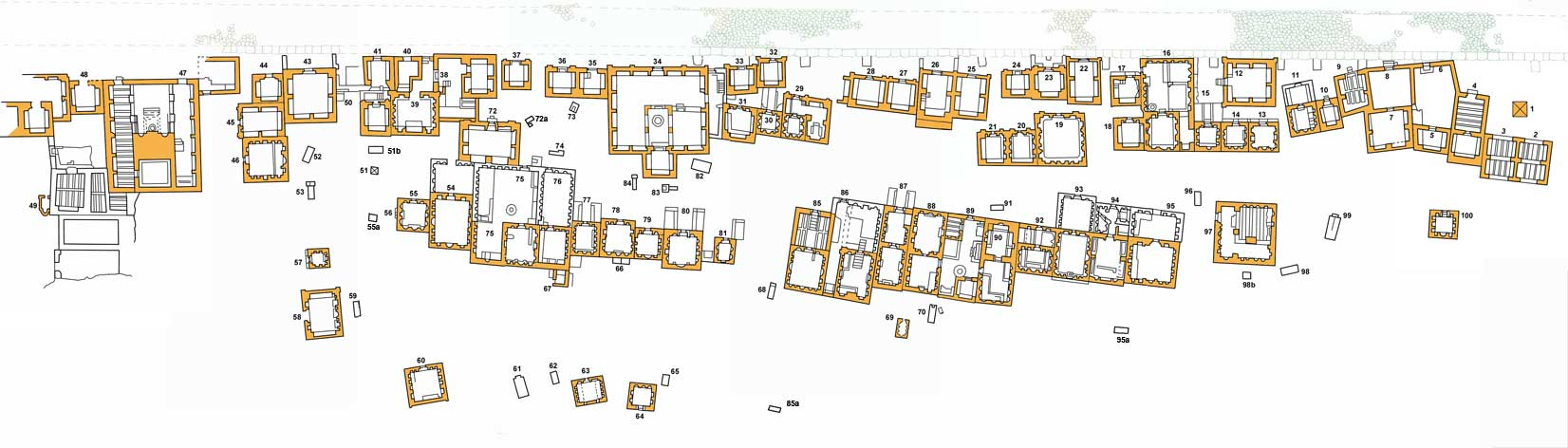
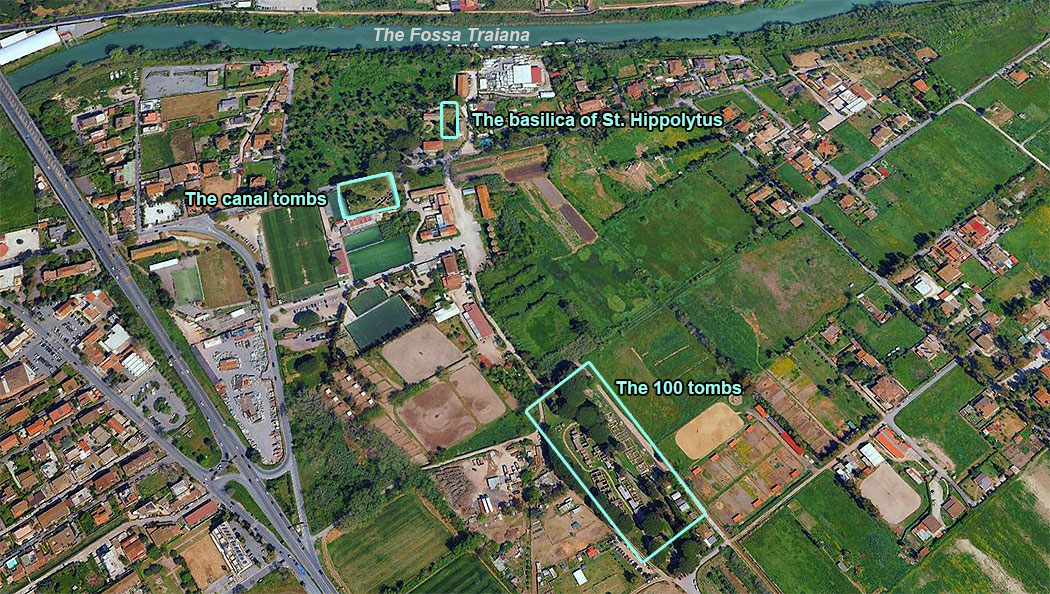
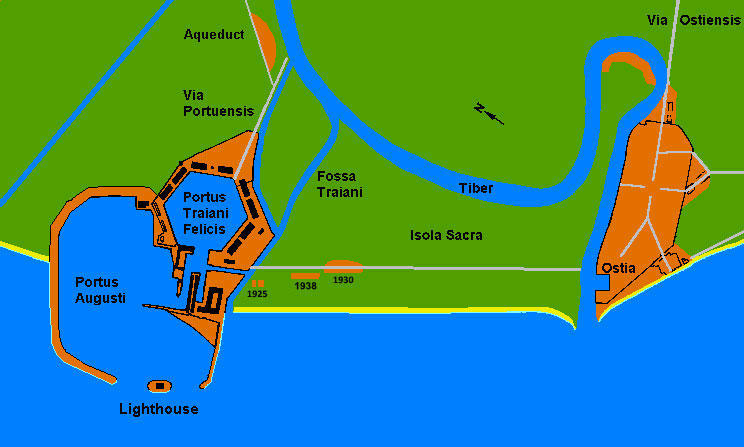
In 1938 a second part of the Isola Sacra necropolis was excavated. This section is located beneath a farmyard and is covered with soil again.
The first part of the necopolis had been excavated earlier than the part of the necropolis with the described 100 tombs. In 1925 already a small cluster of tombs was found on the northern side of the Isola Sacra. These tombs are close to Portus, approximately 150 metres to the south-west of the Basilica of Saint Hippolytus. In antiquity the tombs formed a whole with the other graves of the necropolis, the so-called "100 tombs". They are at a distance of a few hundred metres from those tombs 1.
Coming from Fiunicino Sud you find the Canal tombs in the Via Redipuglia. Along this street. When I noticed the tombs for the first time, I saw a small, bad railed excavation with a number of tombs. A large sign, which was completely faded, stood desolated at an unreadable distance away from the fence.
When I was working on the description of the great cemetery, I asked various archaeologists what they could tell me about this small cluster of tombs. The big silence started. It seemed like these graves had come forth from the ground yesterday and nobody had taken notice. After a lot of searching I got a photocopy with the description of a part of these tombs. These tombs, the green ones, are numbered on the map below.
During new excavations a few tombs are brought to daylight at the north-east side. So, contrary the original drawing (coloured green) tomb A and tomb H are not the most northern entrance to the passageway. Unfortunately, at this moment we don't have more information about these tombs.
The new structures (in red) are reconstructed by myself from my own observation and by Google maps (for the size).
As soon as we find some more information, we shall add that information to this website.
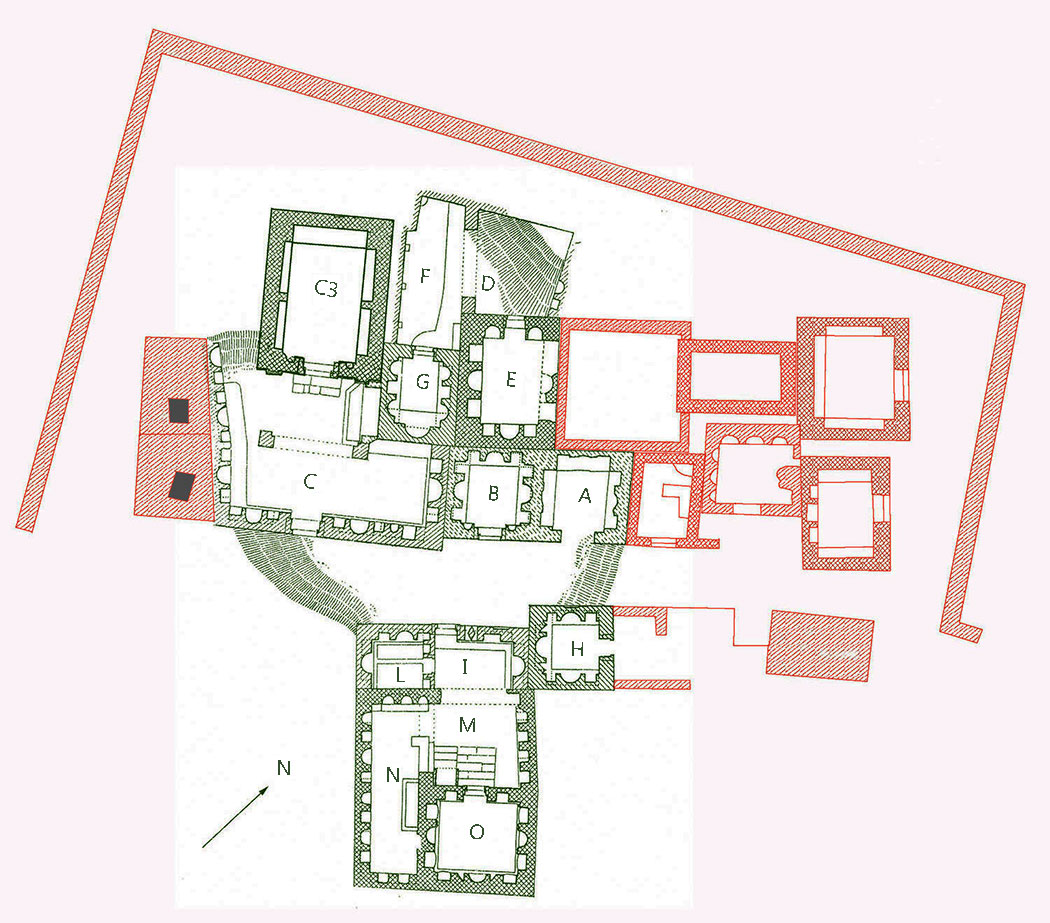
A B C C3 D E F G H I L M N O
The unnumbered tombs (red)
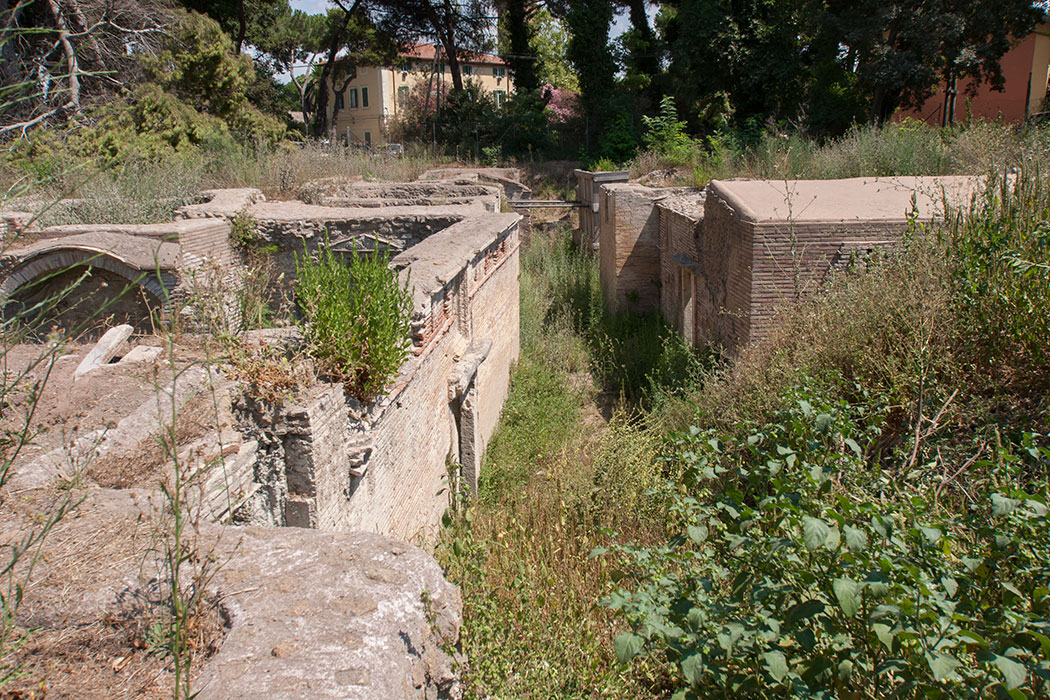
The block of tombs is divided in two parts by a street running north-south.
The roofs of the tombs rise a couple of centimetres (!) above the modern ground level.
Some of the tombs have their entrances on the side of the street, others can only be reached via neighbouring tombs. There is no evidence that the latter tombs originally were part of the neighbouring tombs.
Many sarcophagi, paintings and inscriptions have been found. They are all stored in the depots. When the necropolis wasn't used anymore, the tombs changed into a place for garbage. Many fragments of pottery did not belong to the inventory of the tombs, but were broken tableware and refuse from the nearby harbour.
In 2008, when this was written, the canal tombs could not be visited. The vegetation covered the site again and the tombs seemed to wait for better times.
- Sources
- Russel Meigs - Roman Ostia, At the Clarendon Press 1973
- Guido Calza - Necropoli nell'Isola Sacra'(1940)
- Dr. Jan Theo Bakker.
notes- 1: The name of this cluster, the 'Canal Tombs', has been given by myself, because of its location so near by the Canal of Traianus (the 'Fossa Traiana').
Ostia, fornitore o mercato di Roma
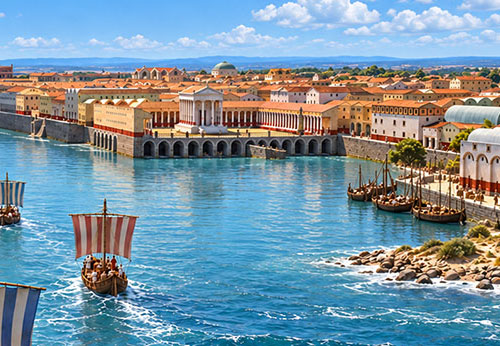
Il mutamento del ruolo economico di Ostia dopo la costruzione di Portus alla luce delle nuove testimonianze archeologiche.
Leggi tutto...Carthago Nova, il porto perfetto della (nuova) città nuova
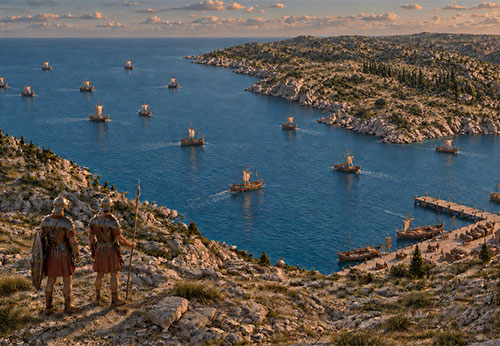
Dopo la morte di Asdrubale, suo nipote Annibale divenne comandante supremo delle forze cartaginesi in Hispania....
Leggi tutto...Isola Sacra Index (I)
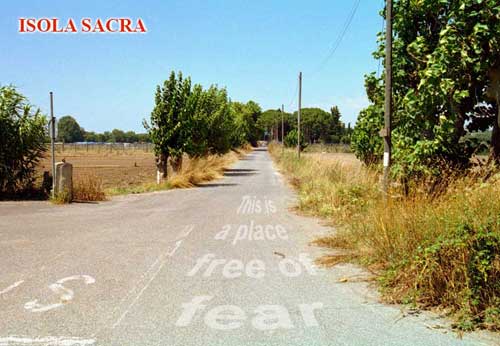
Sezione speciale dedicata al cimitero romano di Portus (in inglese)....
Leggi tutto...La flotta pisana ritrovata
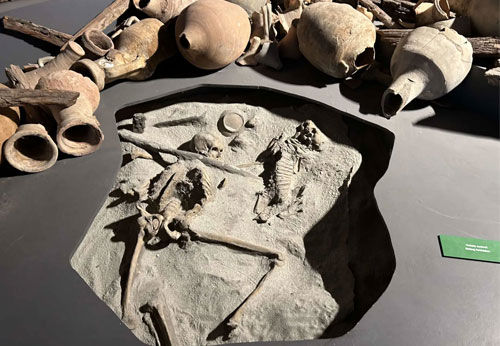
Nel 1998, nei pressi della stazione di Pisa San Rossore, fu scoperto per caso un incredibile patrimonio archeologico....
Leggi tutto...Leptiminus
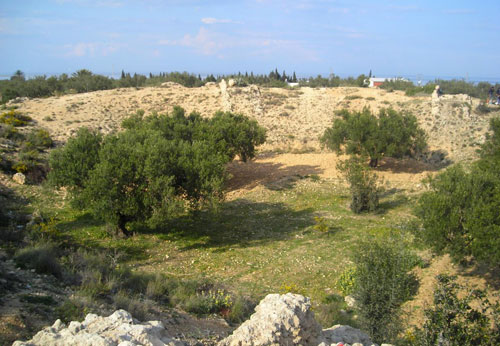
Nel sito dell’odierna Lamta, sulla costa orientale della Tunisia, esisteva già nell’antichità una città portuale chiamata Leptis Minor....
Leggi tutto... We are committed to providing versions of our articles and interviews in several languages, but our first language is English.