Tomb 20
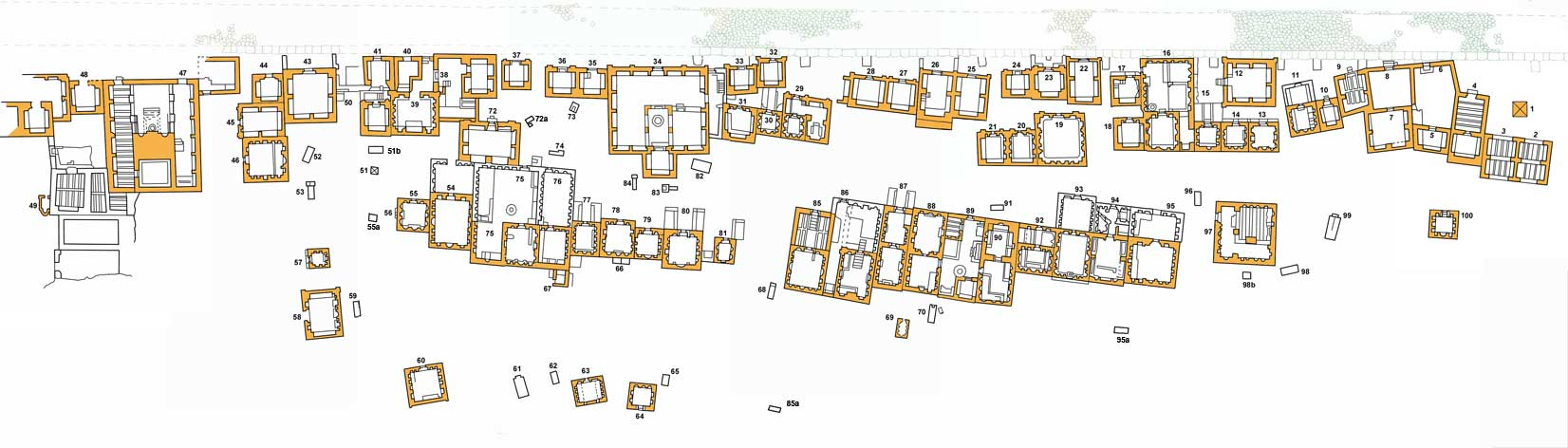
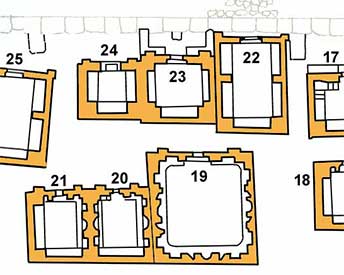

Tombs 20 and 21 form a couple. The facades of both graves are unique. They are decorated with three brick semi-columns on a marble foot and with marble semi-capitals. Like tomb 19, tomb 20 has lost its view on the Via Severiana after the erection of tomb 24. The inscription above the entrance has disappeared as well.
From the once rich decoration in the burial chamber little has been left. However, fragments of a mosaic floor, below which four burial places were located, have been found.
On a covering plate of a sarcophagus the following text was written:
D(is) M(anibus) TV QVI LEGES SPONDEO [------ A]MICE QVOT ME
DISCVMBENTE BIBENTE VIDES
HOC QVANDIV VIXI [------]TIMA FECI IDEM ET TIBI DII FACIANT
You, friend (...) who shall read this, while I am lying down, and who will see this alive, I have done this (...) when I was alive, and may the gods do this also to you.
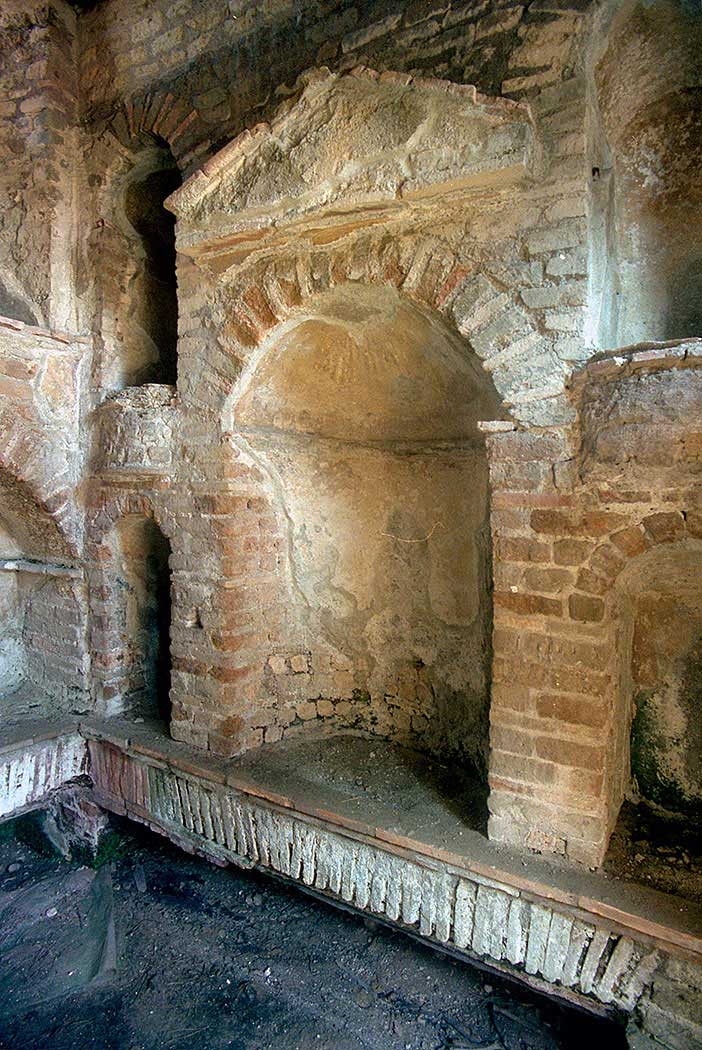
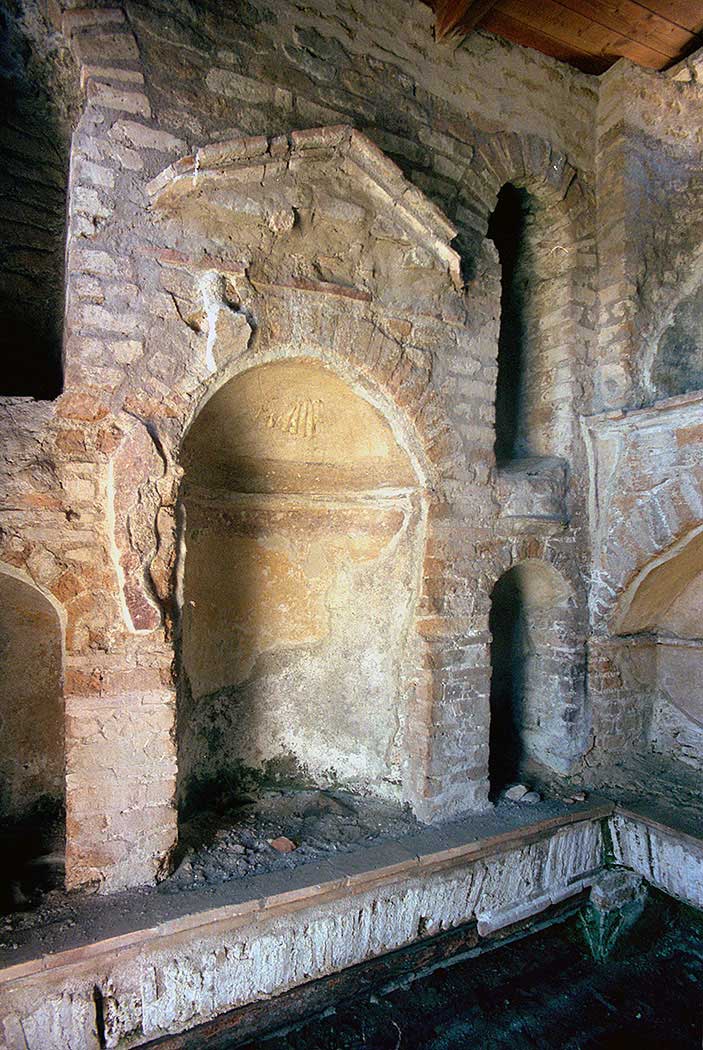
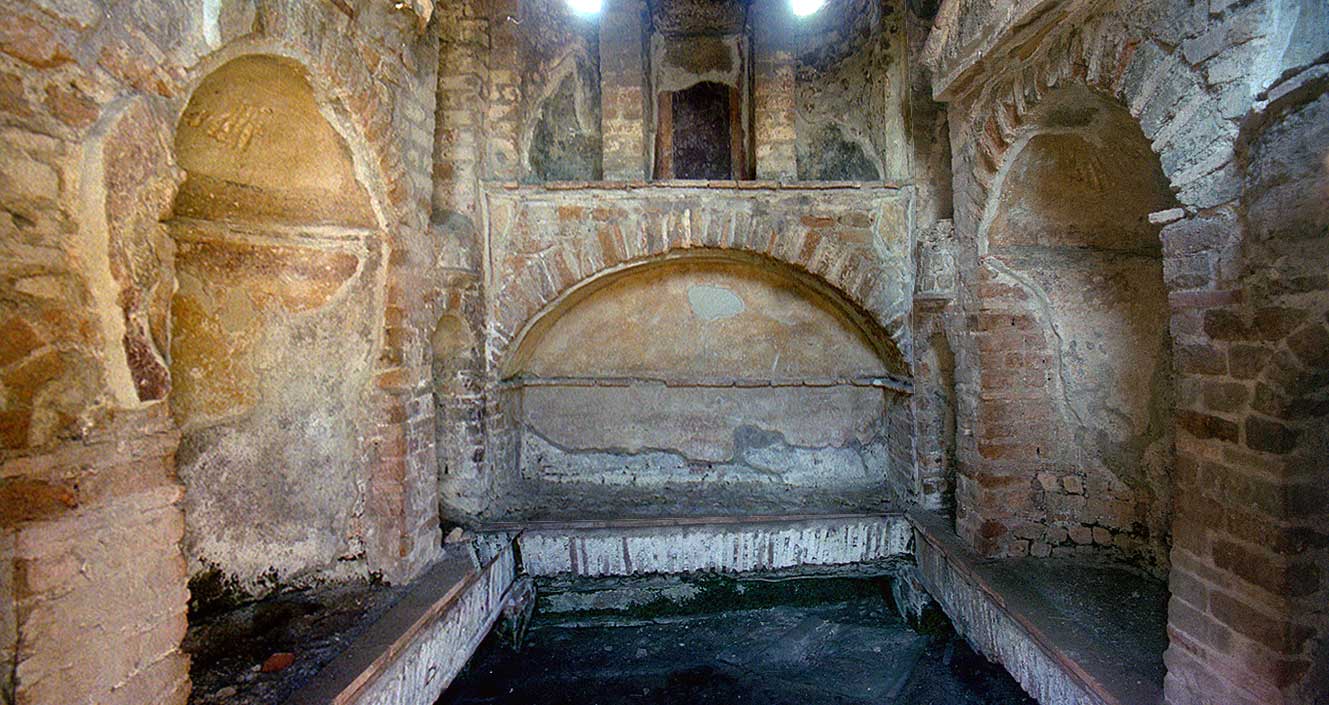
The burial chamber has been built for a mixed form of burial; arcosolia for inhumation in the lower part of the walls and above smaller niches for urns. In the back wall we find a large apsis-like niche flanked by two small windows. Both the right and the left wall have a semicircular niche with a triangular tympanum above. In the large niches traces of stucco shells can still be seen. There are also niches in the wall with the entrance.
Tomb 20 originates from 160-170 AD.
- Sources
- Russel Meigs - Roman Ostia, At the Clarendon Press 1973
- Guido Calza - Necropoli nell'Isola Sacra'(1940)
- Dr. Jan Theo Bakker.
- Hilding Thylander - Inscriptions du port d'Ostie (Lund C W K Gleerup 1952).
- Ida Baldassarre, Irene Bragantini, Chiara Morselli and Franc Taglietti - Necropoli di Porto, Isola Sacra (Roma 1996).
- Notes
- 1:According to Ida Baldassarre the elder gentleman should be the husband of the married couple and the young deceased, the horseman. She points also to the name of the family of Quirina, which tells us that we have to do with a family of freedmen. In that case the young man could not be a charioteer. Therefore the painting is meant perhaps synbolically as a victory over the death. I, Baldassarre, I. Bragantini, Ch. Morselli and F. Taglietti: “Necropoli di Porto” 1996
Ostia, fornitore o mercato di Roma
Il mutamento del ruolo economico di Ostia dopo la costruzione di Portus alla luce delle nuove testimonianze archeologiche.
Leggi tutto...Carthago Nova, il porto perfetto della (nuova) città nuova
Dopo la morte di Asdrubale, suo nipote Annibale divenne comandante supremo delle forze cartaginesi in Hispania....
Leggi tutto...Isola Sacra Index (I)
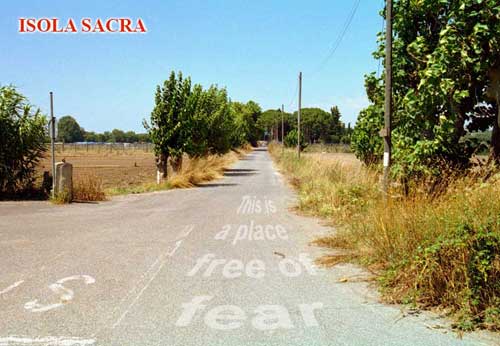
Sezione speciale dedicata al cimitero romano di Portus (in inglese)....
Leggi tutto...La flotta pisana ritrovata
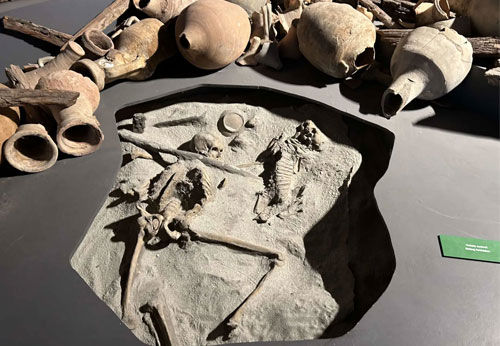
Nel 1998, nei pressi della stazione di Pisa San Rossore, fu scoperto per caso un incredibile patrimonio archeologico....
Leggi tutto...Leptiminus
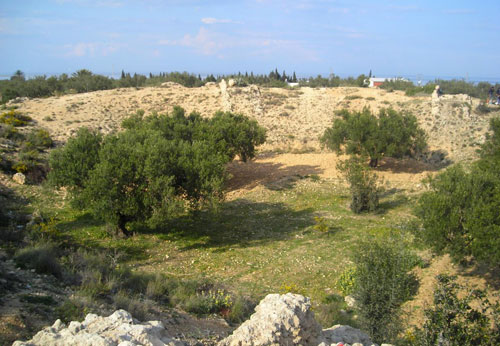
Nel sito dell’odierna Lamta, sulla costa orientale della Tunisia, esisteva già nell’antichità una città portuale chiamata Leptis Minor....
Leggi tutto... We are committed to providing versions of our articles and interviews in several languages, but our first language is English.