Tomb 47
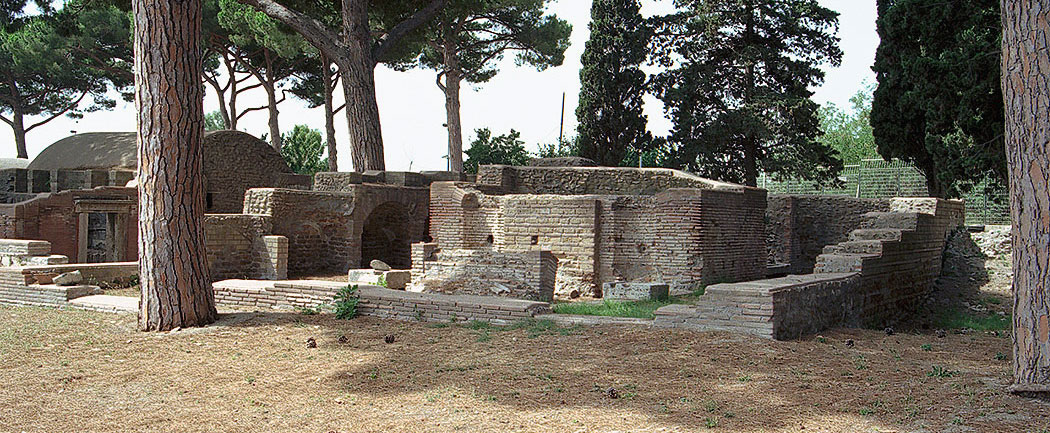
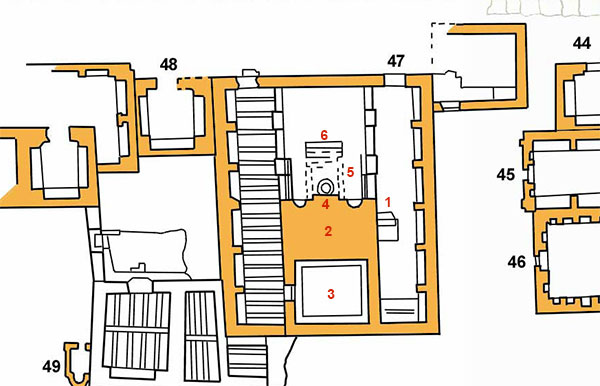
6. Marble steps for flowing water
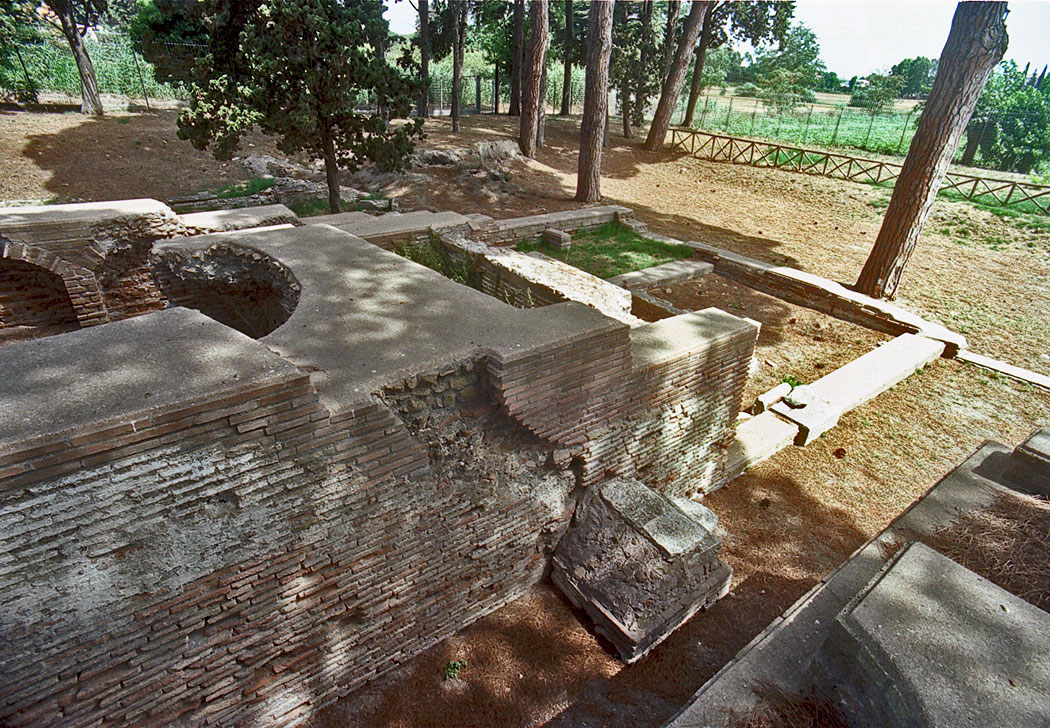
The grave consisted of two floors, two burial chambers, a solarium in front of the upper burial chamber and a space that was hardly accessible. Because the latter room was covered inside with waterproof material, one might think of a cistern (water reservoir), connected with the fountain outside. That fountain had a central well flanked by two niches and marble steps from which water was running down. Finally the water was collected in a basin in front of the steps.
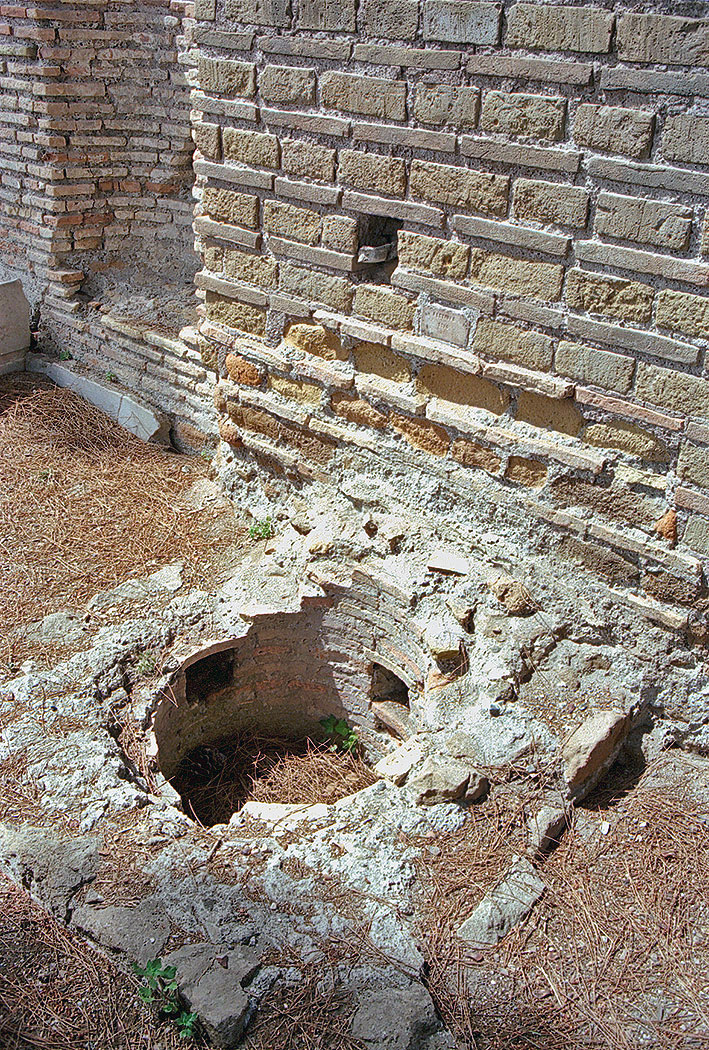
the led pipe by which the water was supplied.
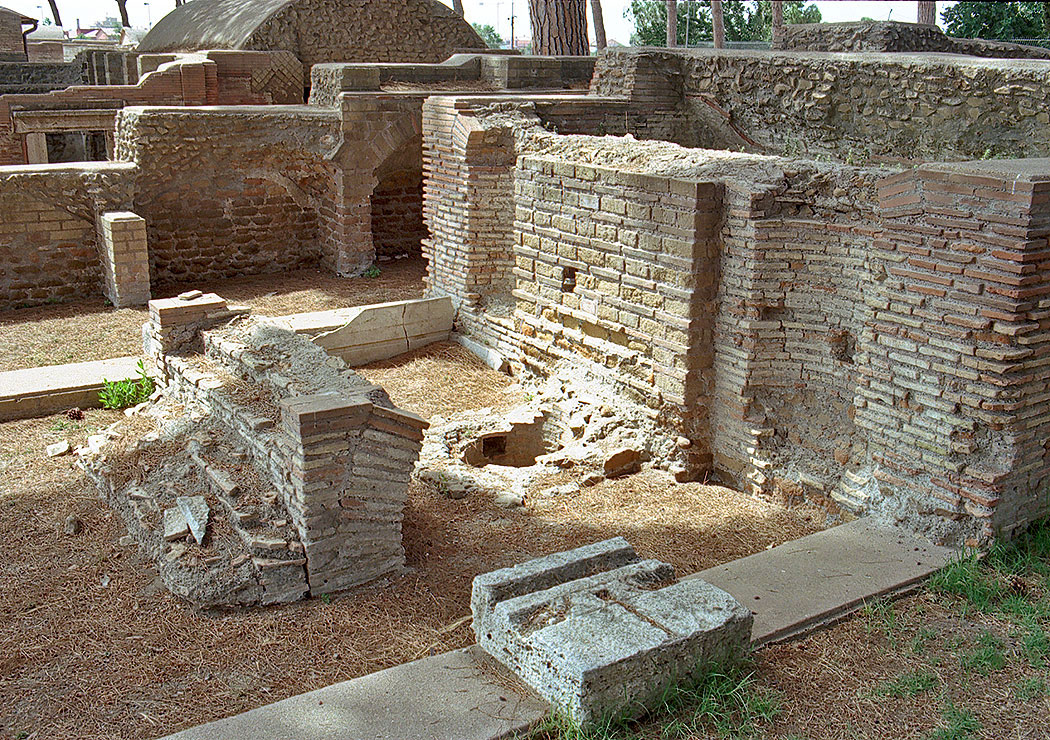
In front of the well, the remains of the large stairs.
The entrance of the lower burial chamber lies on the north side. The stairs for reaching the upper floor are located on the south side.
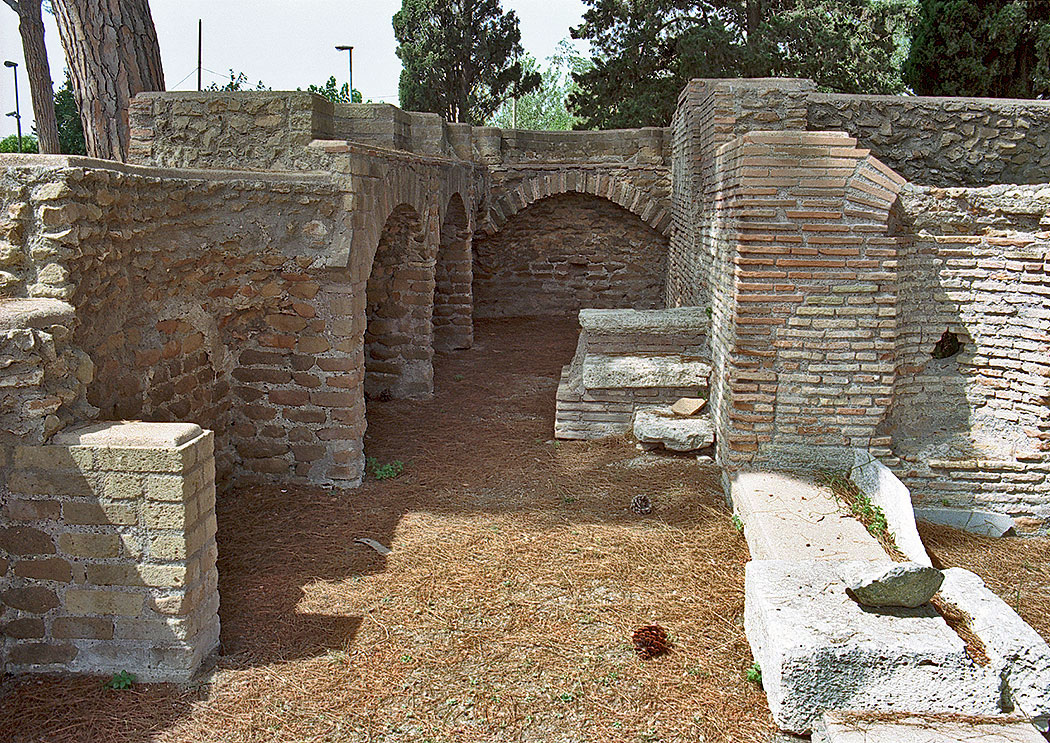
From the lower burial chamber we can hardly tell anything about the burial rites. There were probably a mosaic floor and marble sarcophagi. Investigation below the floor has brought to light several older tombs; tombs "alla cappuccina", tombs "a cassone" and amphorae. During the building of tomb 47 these graves have been spared.
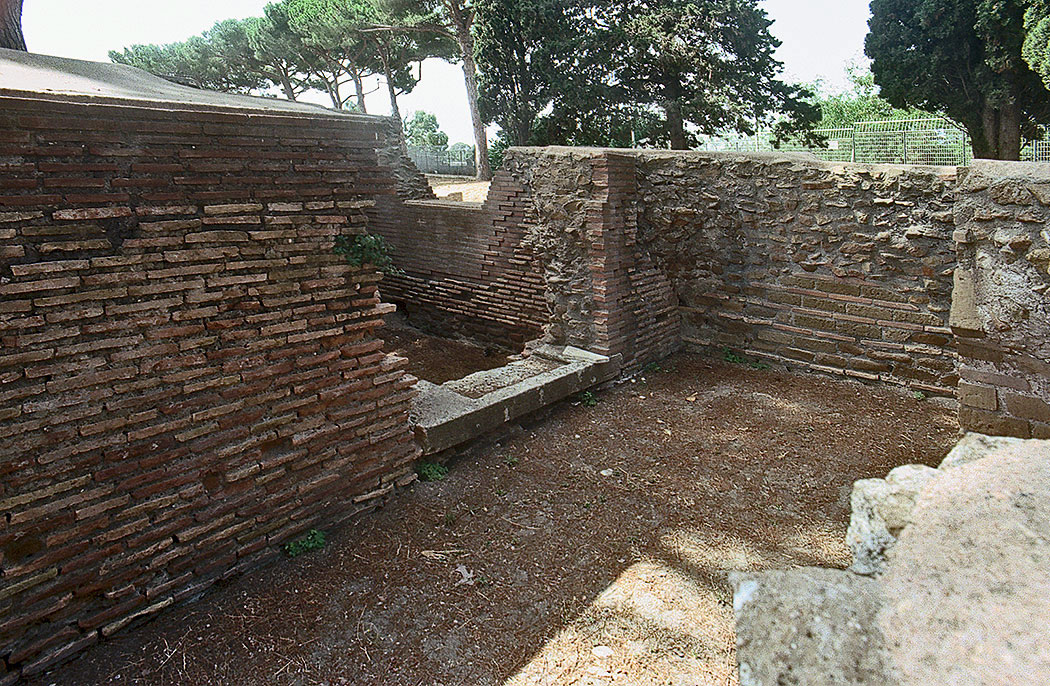
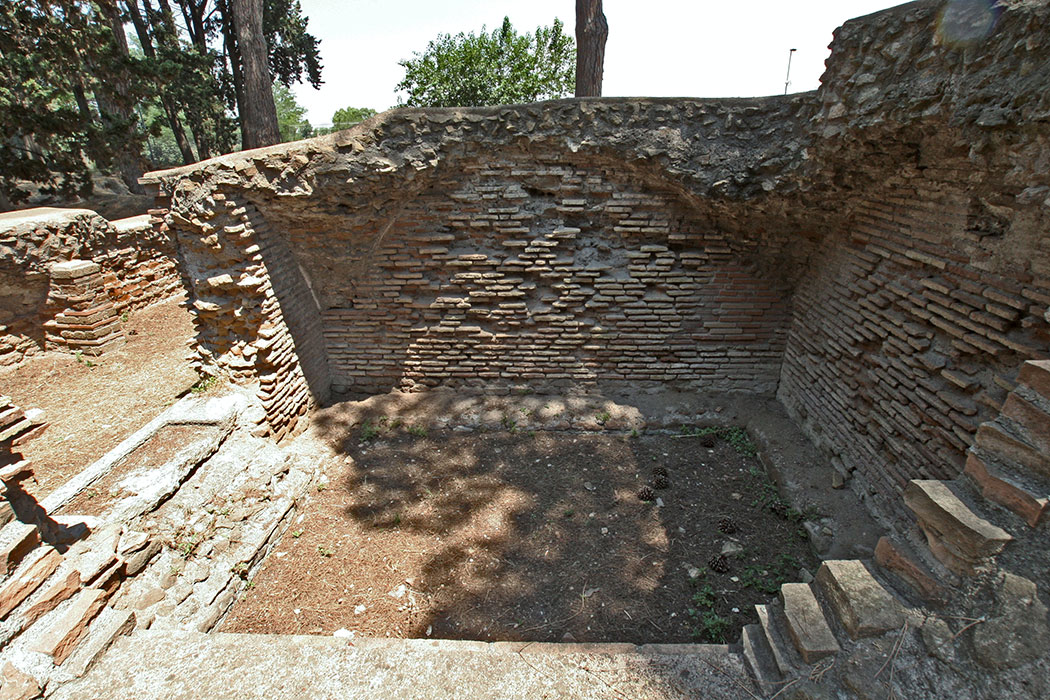
According to the construction and the plan, we can date tomb 47 to the end of the third century AD. Artifacts such as oil lamps and coins show that tomb 47 has been used at least till the late fourth century AD.
- Sources
- Russel Meigs - Roman Ostia, At the Clarendon Press 1973
- Guido Calza - Necropoli nell'Isola Sacra'(1940)
- Dr. Jan Theo Bakker.
- Hilding Thylander - Inscriptions du port d'Ostie (Lund C W K Gleerup 1952).
- Ida Baldassarre, Irene Bragantini, Chiara Morselli and Franc Taglietti - Necropoli di Porto, Isola Sacra (Roma 1996).
- Notes
- 1:The fountain described by I. Baldassarre was not recognized by G. Calza. In his first report he saw the marble stairs as a way to reach the upper floor. He mentioned, however, the discovery of a thin lead pipe for water and an ornament for pouring out water - I. Baldassarre, I. Bragantini, Ch. Morselli and and F. Taglietti: Necropoli di Porto (1996) - Guido Calza: Necropoli Nell’Isola Sacra 1940
Articoli & progetti recenti
Ostia, fornitore o mercato di Roma
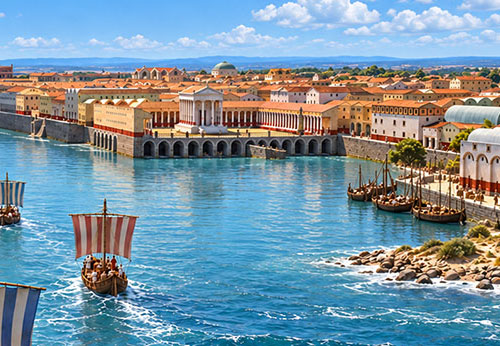
Il mutamento del ruolo economico di Ostia dopo la costruzione di Portus alla luce delle nuove testimonianze archeologiche.
Leggi tutto...Carthago Nova, il porto perfetto della (nuova) città nuova
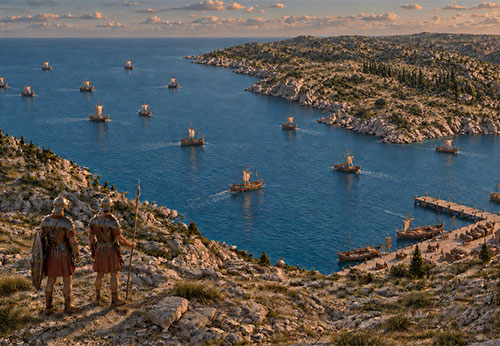
Dopo la morte di Asdrubale, suo nipote Annibale divenne comandante supremo delle forze cartaginesi in Hispania....
Leggi tutto...Isola Sacra Index (I)
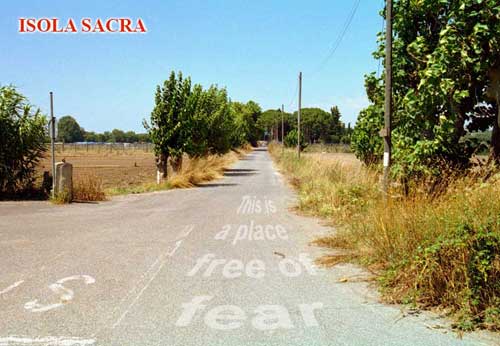
Sezione speciale dedicata al cimitero romano di Portus (in inglese)....
Leggi tutto...La flotta pisana ritrovata
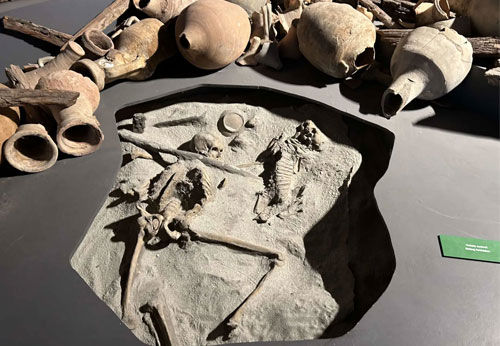
Nel 1998, nei pressi della stazione di Pisa San Rossore, fu scoperto per caso un incredibile patrimonio archeologico....
Leggi tutto...Leptiminus
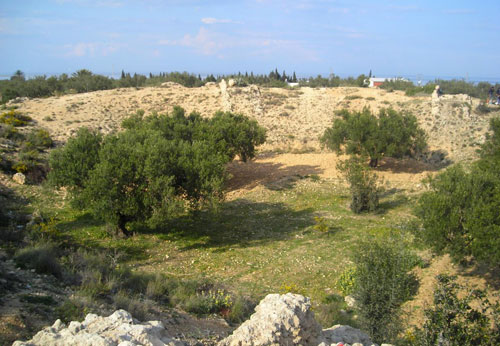
Nel sito dell’odierna Lamta, sulla costa orientale della Tunisia, esisteva già nell’antichità una città portuale chiamata Leptis Minor....
Leggi tutto... We are committed to providing versions of our articles and interviews in several languages, but our first language is English.