Tomb 4
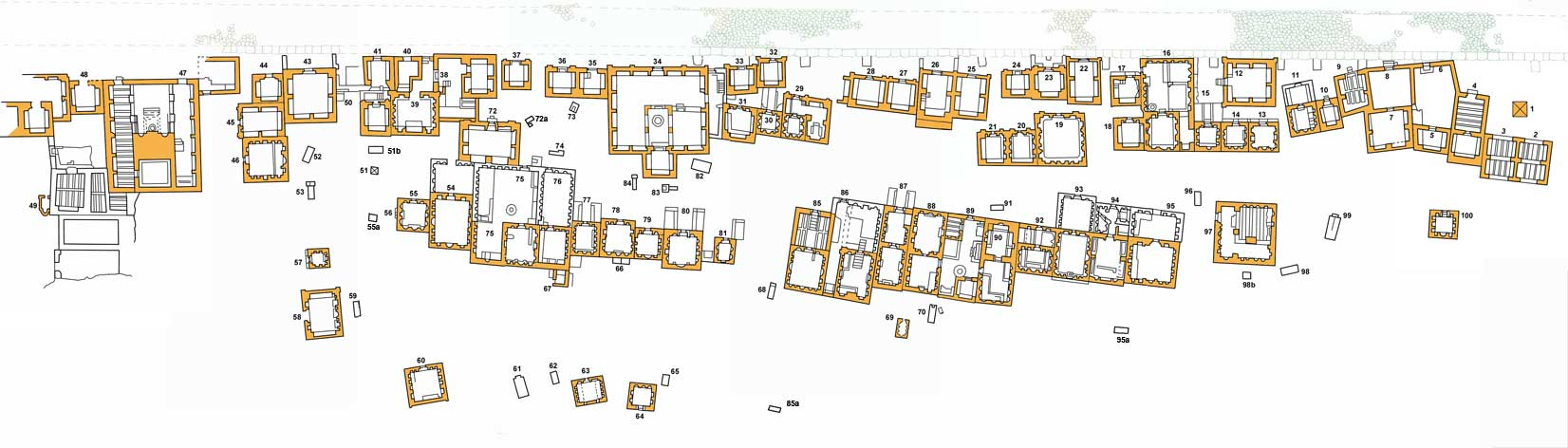
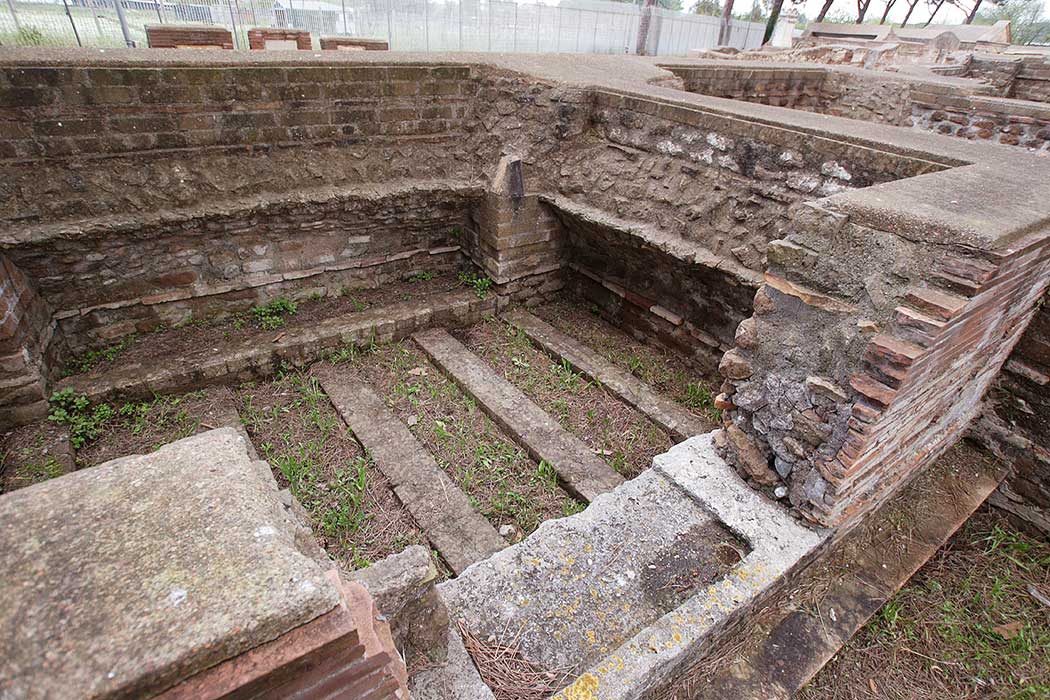
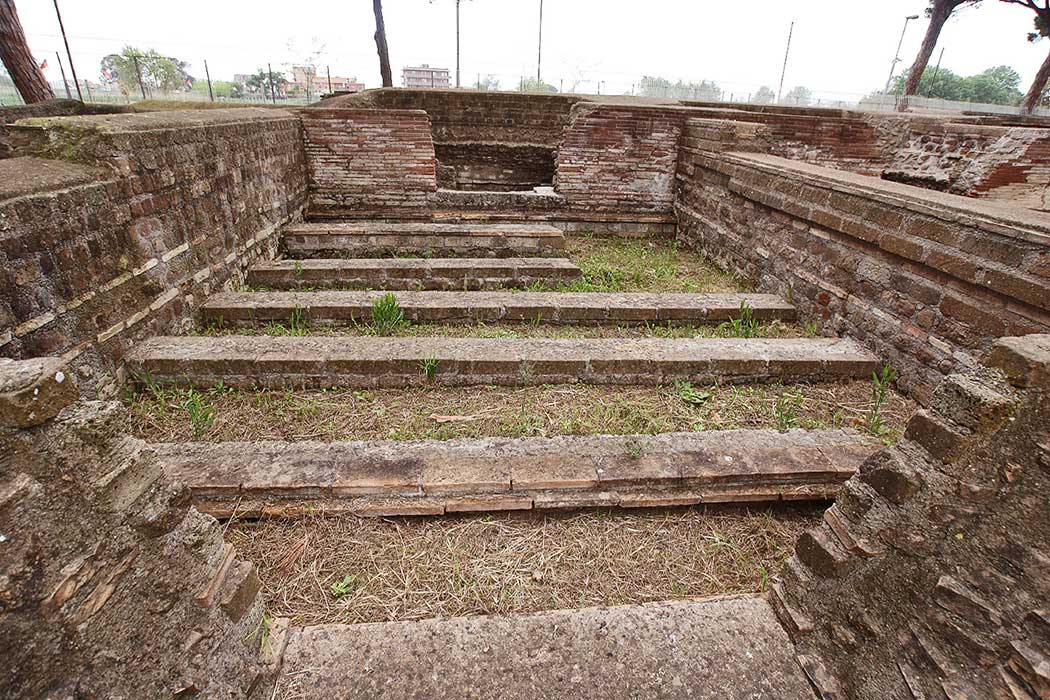
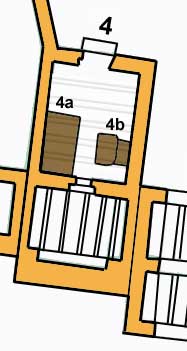 Tomb 4 was used for inhumation. Originally the grave was built on one line with 2 and 3. Later on tomb 4 was enlarged with an enclosure.
Besides burials in the walls of the tomb, many graves were dug under the floor of the tomb and of the enclosure.
During the excavations two graves have been found in the enclosure, which are from a date before the enclosure. One of the graves (4a), covered with a barrel vault, had the following inscription:
D(is) M(anibus)
EPICTESIS GORGIAE LIB(erta)
FECIT SIBI ET GORGIAE
PATRONO
According to the inscription the tomb was built by the freedwoman Epictesis, for herself and her patron Gorgias.
Inside the tomb two bodies were buried, above each other. Both were covered with a roof 'alla cappuccina'. The top grave contained the bones of a woman, obviously Epictesis. The grave was clearly closed after the first burial and re-opened again later on, so the woman died later.
A set of golden earrings has been found between the bones of the woman.
The second grave (4b), a tomb "a cassone", lies against the southern side wall of the enclosure. This grave, with an aedicula and tympanum on the front, had an inscription too:
D(is) M(anibus)
Q(uinto) FLAVIO APRO
VENVLEIA
FELICITAS
CONIVGI SVO BENE
MERENTI FECIT
The tomb had been built for Quintus Flavius Aper by his wife Venuleia Felicitas.
Both graves originate from the time of Traianus.
- Sources
- Russel Meigs - Roman Ostia, At the Clarendon Press 1973
- Guido Calza - Necropoli nell'Isola Sacra'(1940)
- Dr. Jan Theo Bakker.
- Hilding Thylander - Inscriptions du port d'Ostie (Lund C W K Gleerup 1952).
- Ida Baldassare, Irene Bragantini, Chiara Morselli and Franc Taglietti - Necropoli di Porto, Isola Sacra (Roma 1996).
Ostia, fornitore o mercato di Roma
Il mutamento del ruolo economico di Ostia dopo la costruzione di Portus alla luce delle nuove testimonianze archeologiche.
Leggi tutto...Carthago Nova, il porto perfetto della (nuova) città nuova
Dopo la morte di Asdrubale, suo nipote Annibale divenne comandante supremo delle forze cartaginesi in Hispania....
Leggi tutto...Isola Sacra Index (I)
Sezione speciale dedicata al cimitero romano di Portus (in inglese)....
Leggi tutto...La flotta pisana ritrovata
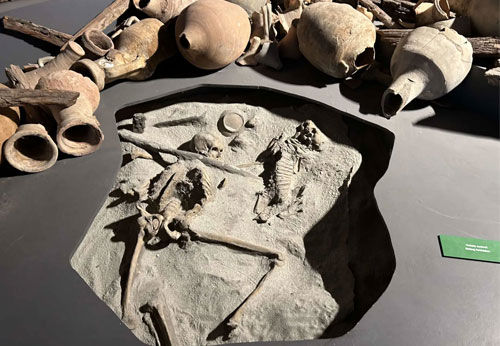
Nel 1998, nei pressi della stazione di Pisa San Rossore, fu scoperto per caso un incredibile patrimonio archeologico....
Leggi tutto...Leptiminus
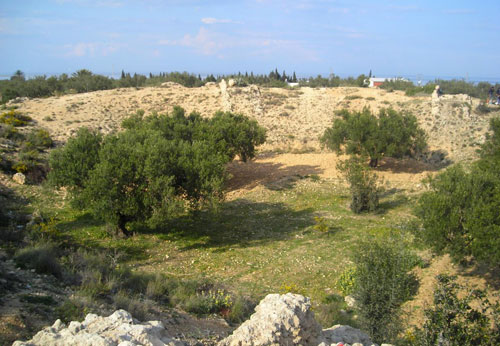
Nel sito dell’odierna Lamta, sulla costa orientale della Tunisia, esisteva già nell’antichità una città portuale chiamata Leptis Minor....
Leggi tutto... We are committed to providing versions of our articles and interviews in several languages, but our first language is English.