Canal tomb C3
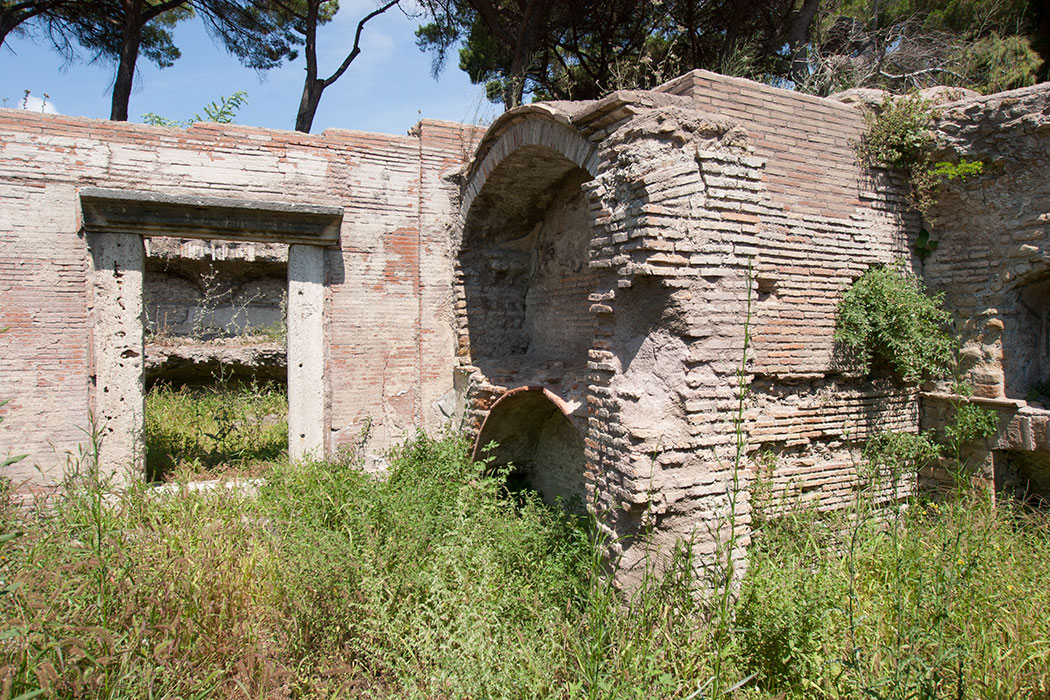
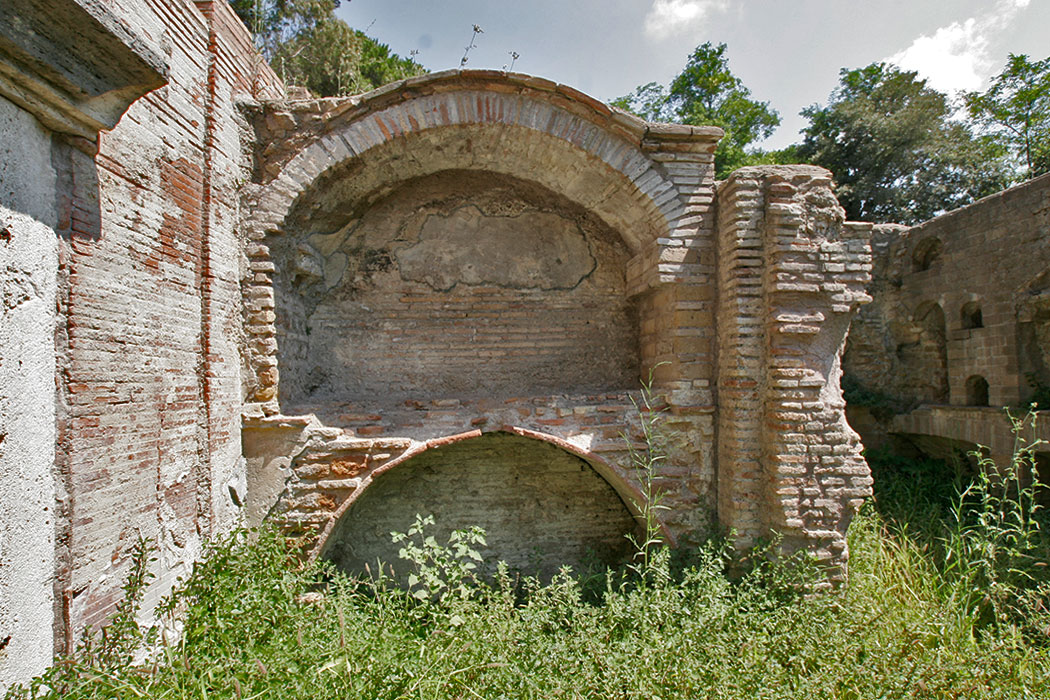
Between the portico and the entrance wall of tomb C3 stands a brick wall with two arcosolia. The upper one had a stucco front imitating the front of a marble sarcophagus with a hunting scene: a lion biting a deer and two horsemen fighting a lion and a panther. The cover of this 'sarcophagus' had a scene with cupids fighting wild animals.The 'sarcophagus', which had no inscription, has probably been brought over to the Ostian depots. The arcosolium below was painted, but was already during the excavations in a pitiable condition. The ceiling was painted with flowers, and the backside with two male figures, two birds and also flowers. This arcosolium was still closed; on the skeleton, covered with big tiles, no objects were found.
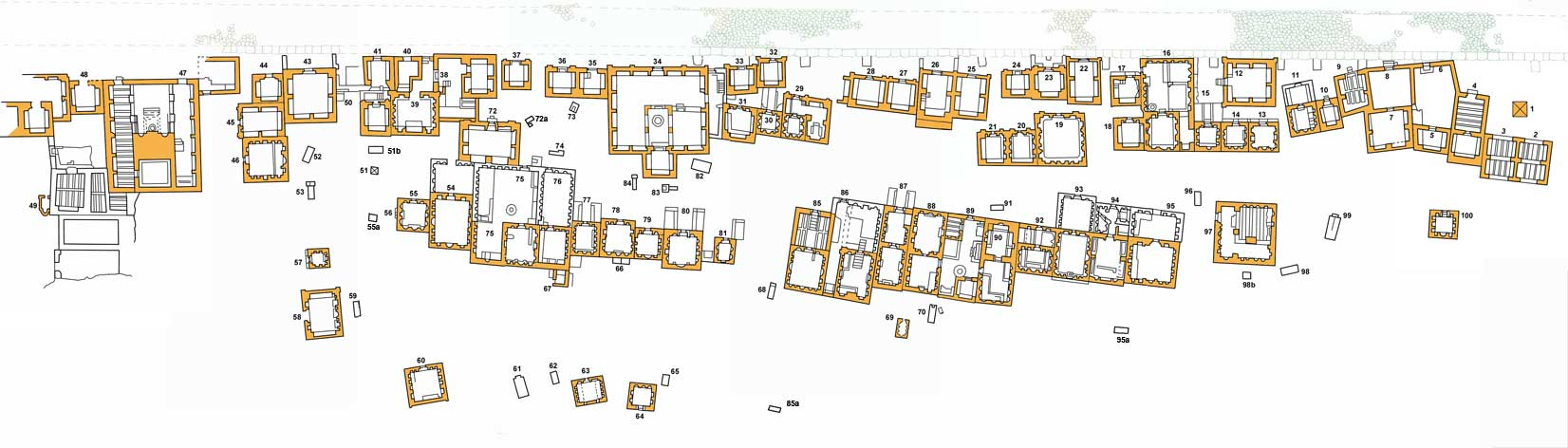
Considering the measurements mentioned in the inscription above the entrance of tomb C, we may regard tombs C and C3 as one unit, whereby C3 is the burial chamber and C the enclosure. The burial chamber (C3) was used for both inhumation and cremation. The back wall as well as both side walls have arcosolia on two levels and small niches for urns above. The entrance wall had only small niches for urns. Like the second arcosolium outside the entrance, the arcosolia on the second level inside the burial chamber were also equiped with imitation sarcophagi. Originally the second level consisted of one arcosolium flanked by two smaller niches. These were changed later into two arcosolia. During the same time of reuse a large podium was erected in front of the back wall, destroying a stucco panel. A small fragment, still visible during the excavation, showed that the panel was decorated with the same theme as the imitation sarcophagi.
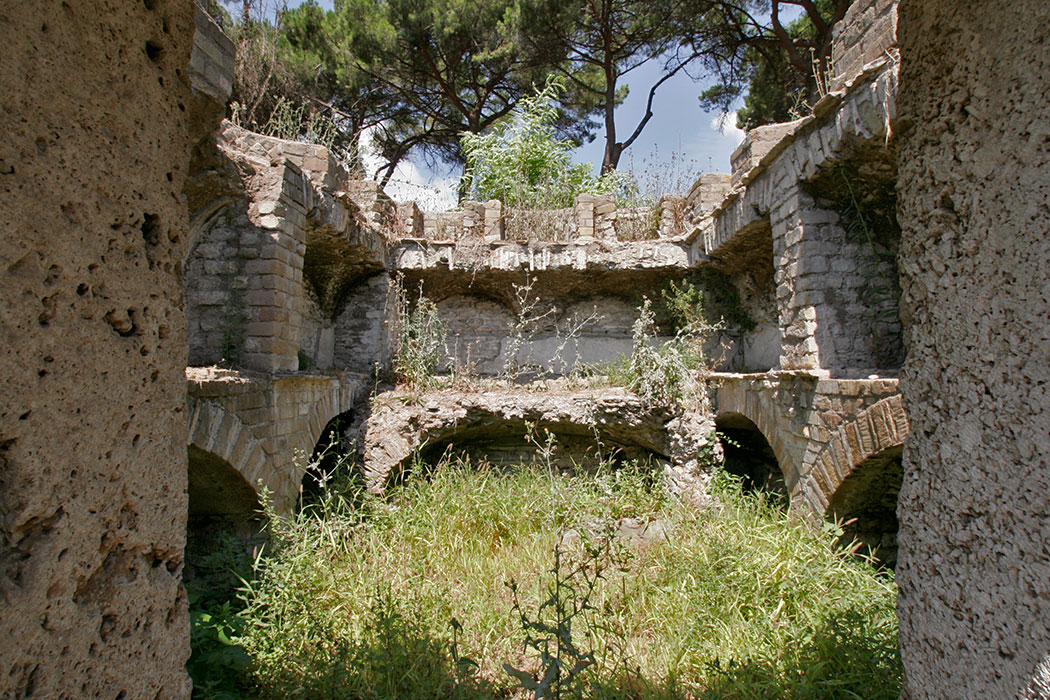
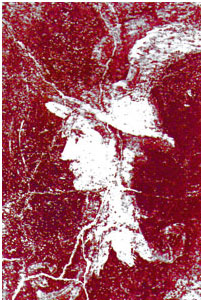
The ceiling was painted with vivid colors.
Back to introduction Canal Tombs
- Sources
- Russel Meigs - Roman Ostia, At the Clarendon Press 1973
- Guido Calza - Necropoli nell'Isola Sacra'(1940)
- Dr. Jan Theo Bakker.
Ostia, fornitore o mercato di Roma
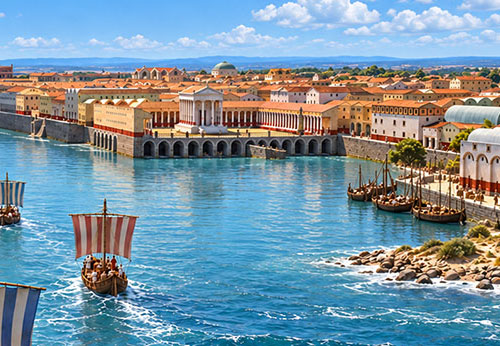
Il mutamento del ruolo economico di Ostia dopo la costruzione di Portus alla luce delle nuove testimonianze archeologiche.
Leggi tutto...Carthago Nova, il porto perfetto della (nuova) città nuova
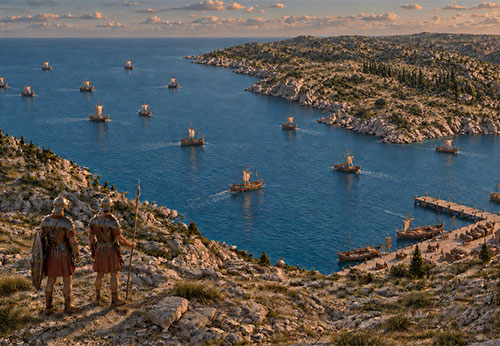
Dopo la morte di Asdrubale, suo nipote Annibale divenne comandante supremo delle forze cartaginesi in Hispania....
Leggi tutto...Isola Sacra Index (I)
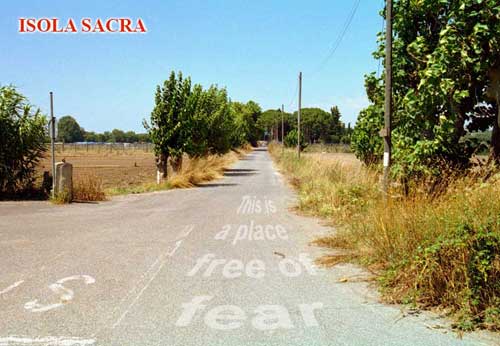
Sezione speciale dedicata al cimitero romano di Portus (in inglese)....
Leggi tutto...La flotta pisana ritrovata
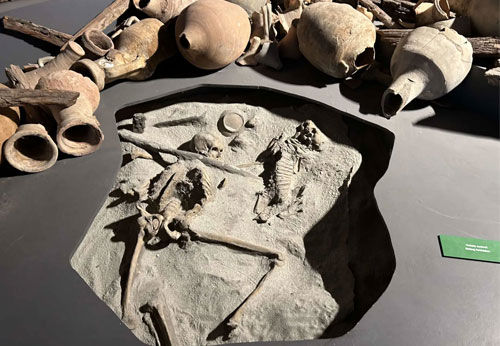
Nel 1998, nei pressi della stazione di Pisa San Rossore, fu scoperto per caso un incredibile patrimonio archeologico....
Leggi tutto...Leptiminus
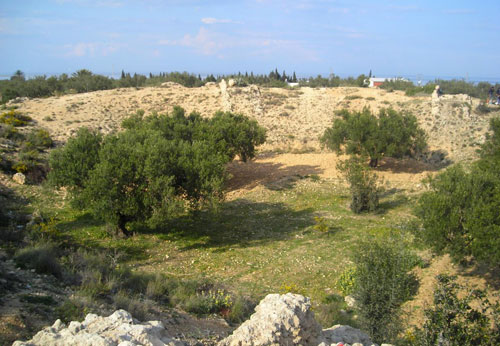
Nel sito dell’odierna Lamta, sulla costa orientale della Tunisia, esisteva già nell’antichità una città portuale chiamata Leptis Minor....
Leggi tutto... We are committed to providing versions of our articles and interviews in several languages, but our first language is English.