Tomb 35
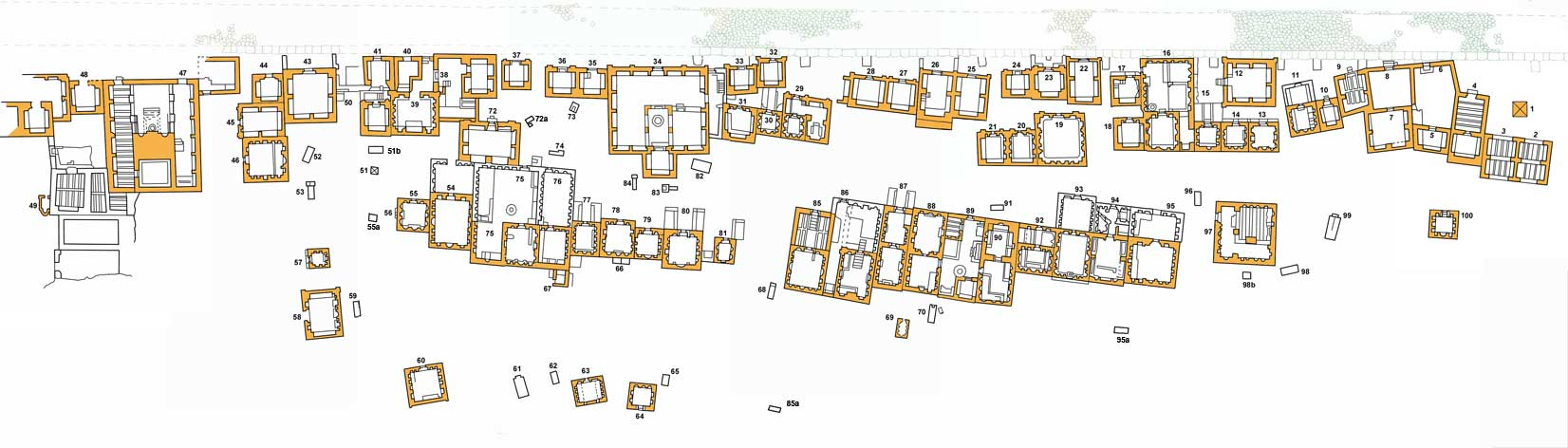
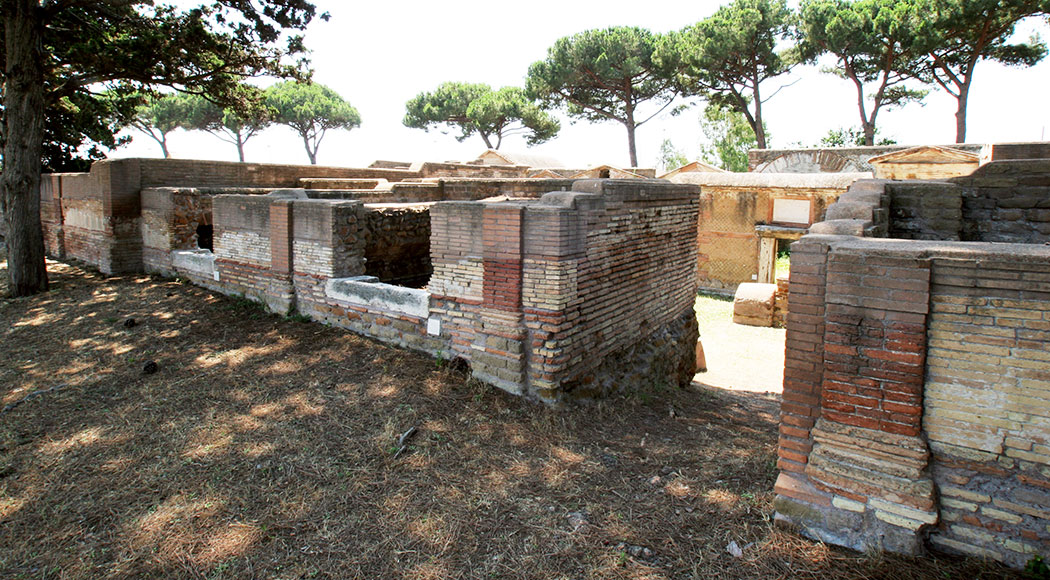
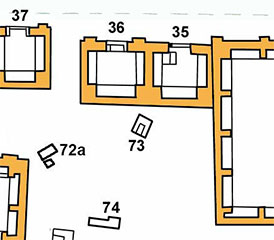 Tombs 35 and 36 were built as one grave with two burial chambers, each with its own entrance, facing the Via Severiana.
Tomb 35 borders on the south to tomb 34. Tomb 36 is detached on three sides and shares with tomb 37 s passage to the graves behind.
Both graves are arranged for inhumation only.
Also beneath the floor burial places were located. The walls have double rows of arcosolia.
Between the rubbish of the collapsed walls marble fragments have been found during the excavations. This points to sarcophagi or to arcosolia with marble covers.
The floor had a black-and-white mosaic. In tomb 35 are still some traces of painted decorations with flowers in the niches.
The tombs date from a rather late period (first half of the third century AD).

- Sources
- Russel Meigs - Roman Ostia, At the Clarendon Press 1973
- Guido Calza - Necropoli nell'Isola Sacra'(1940)
- Dr. Jan Theo Bakker.
- Hilding Thylander - Inscriptions du port d'Ostie (Lund C W K Gleerup 1952).
- Ida Baldassarre, Irene Bragantini, Chiara Morselli and Franc Taglietti - Necropoli di Porto, Isola Sacra (Roma 1996).
Ostia, fornitore o mercato di Roma
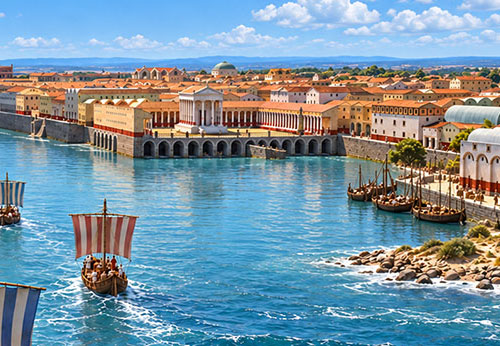
Il mutamento del ruolo economico di Ostia dopo la costruzione di Portus alla luce delle nuove testimonianze archeologiche.
Leggi tutto...Carthago Nova, il porto perfetto della (nuova) città nuova
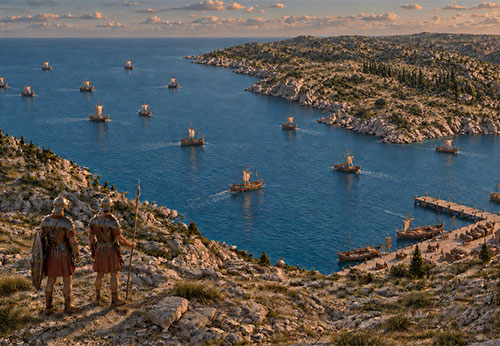
Dopo la morte di Asdrubale, suo nipote Annibale divenne comandante supremo delle forze cartaginesi in Hispania....
Leggi tutto...Isola Sacra Index (I)
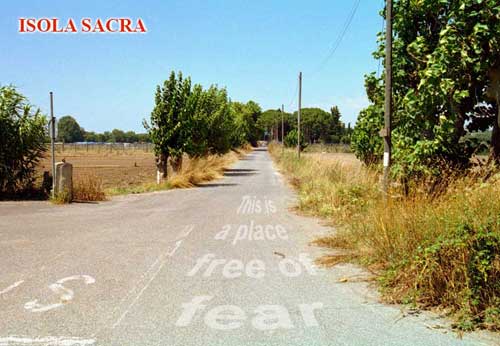
Sezione speciale dedicata al cimitero romano di Portus (in inglese)....
Leggi tutto...La flotta pisana ritrovata
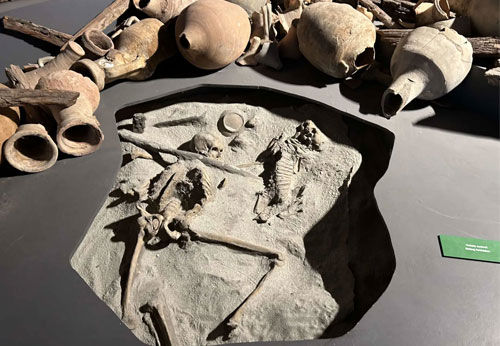
Nel 1998, nei pressi della stazione di Pisa San Rossore, fu scoperto per caso un incredibile patrimonio archeologico....
Leggi tutto...Leptiminus
Nel sito dell’odierna Lamta, sulla costa orientale della Tunisia, esisteva già nell’antichità una città portuale chiamata Leptis Minor....
Leggi tutto... We are committed to providing versions of our articles and interviews in several languages, but our first language is English.