Tomb 57
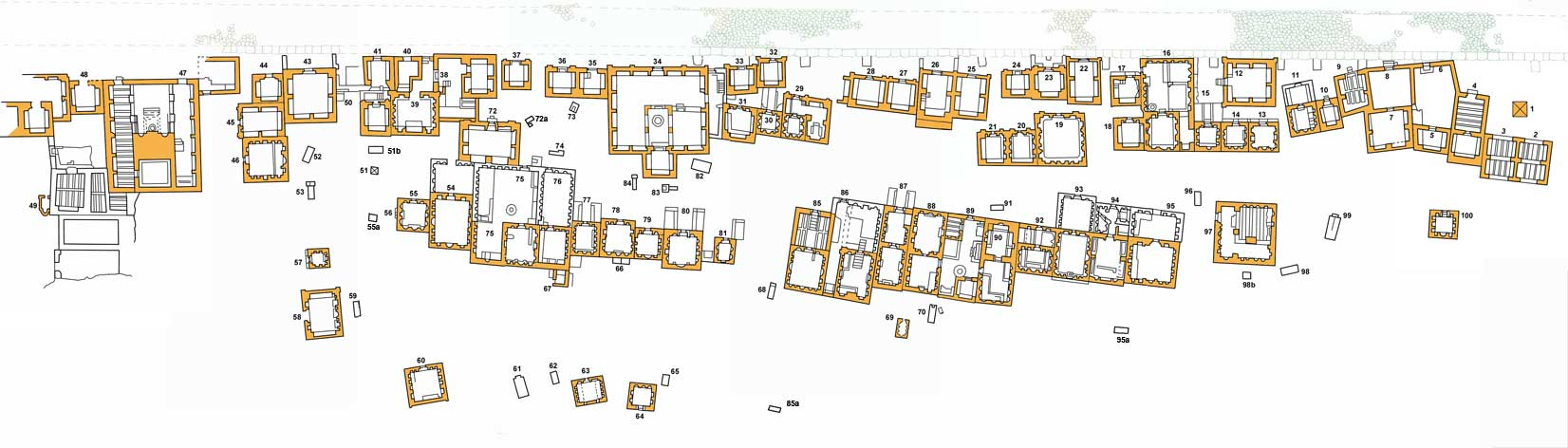
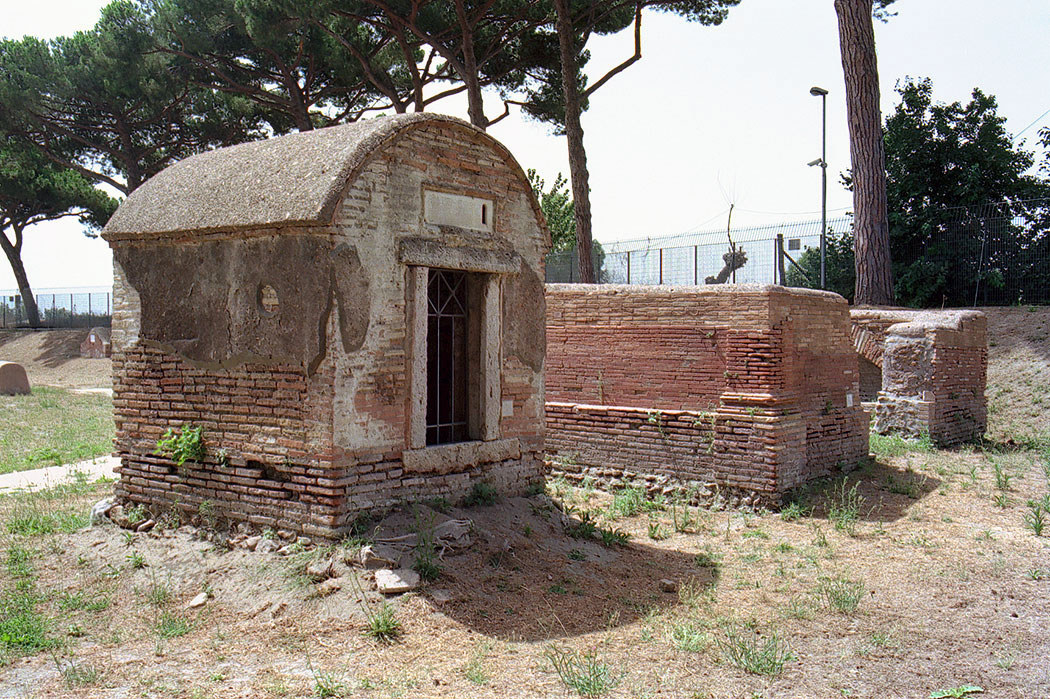
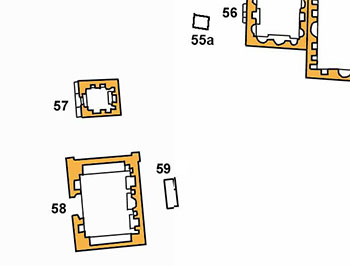 Tomb 57 is, like tomb 58, oriented towards the main street. This suggests a secondary road in front of both tombs.
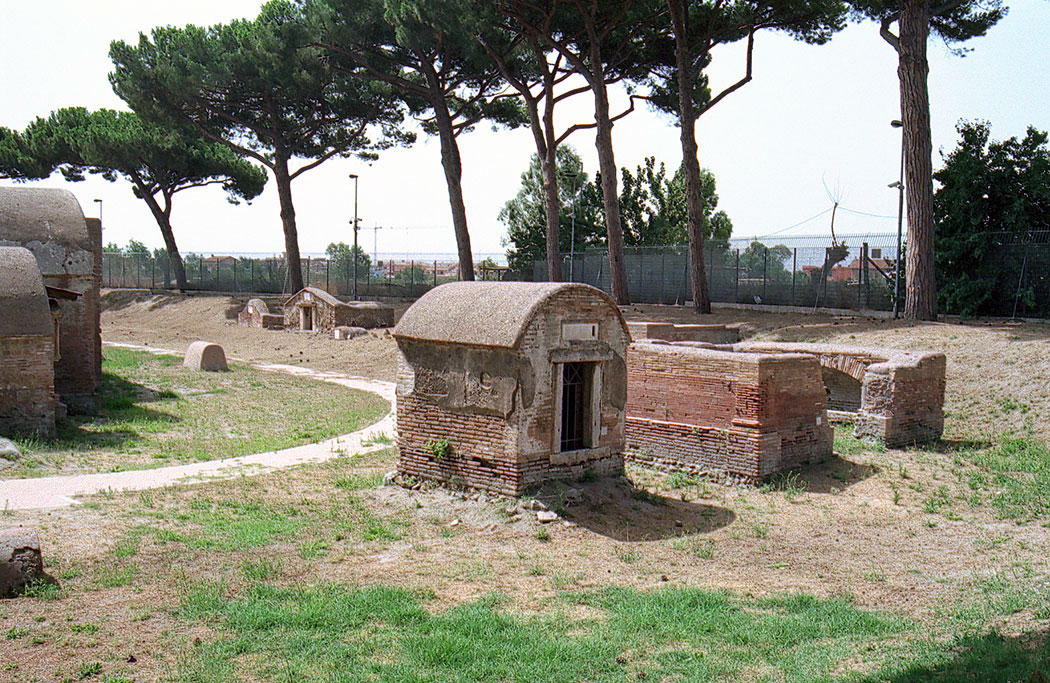
The two detached graves are rather isolated from the other tombs in the necropolis. Originally tomb 57 was only used as a columbarium, but didn't escape in later time, as most of the tombs, from reorganisation.
Above the entrance is a marble slab with the following inscription:
D(is) M(anibus) SEPTIMIAE TYCHENI
P(ublius) AEMILIVS TYRANNVS CONIVGI
CARISSIME ET LECANIVS
ZOSIMVS SORORI PIAENTISSIME
FECERVNT ET SVIS OMNIBVS
According to the text the grave was built for Septimia Tyche by Publius Aemilius Tyrannus and Lecanius Zosimus, for the one his beloved wife and for the other his very pious sister, and for all other members of the family.
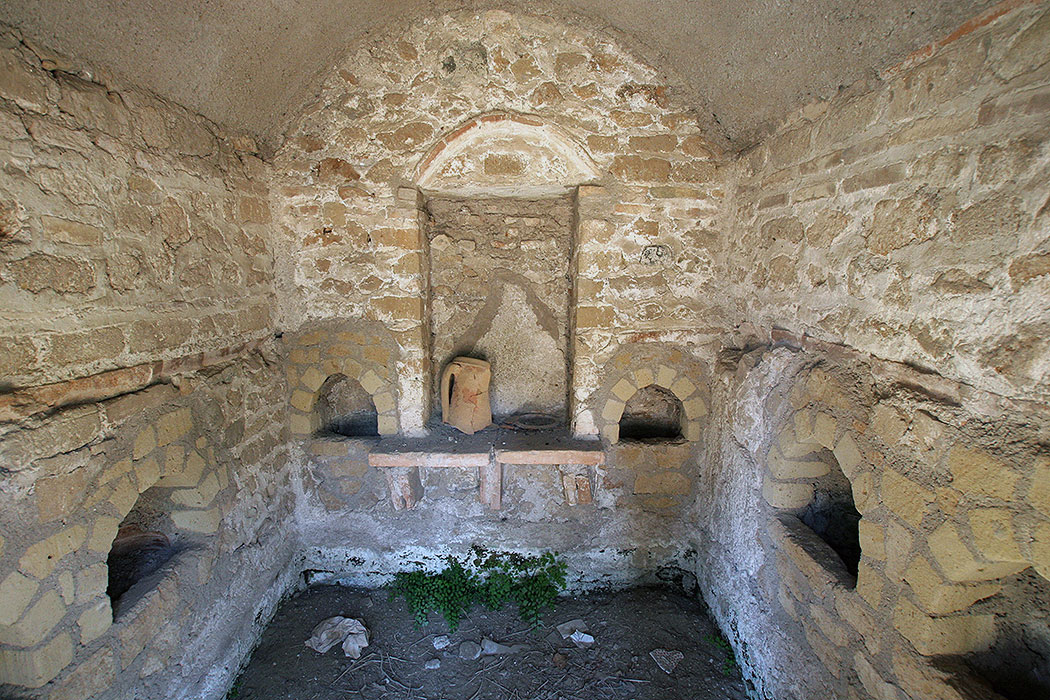
The burial chamber is well preserved. There are no niches in the upper parts of the walls. These parts were, like the niches, beautifully decorated. All the paintings have been taken off the walls and put away in the storage rooms of the museum of Ostia.
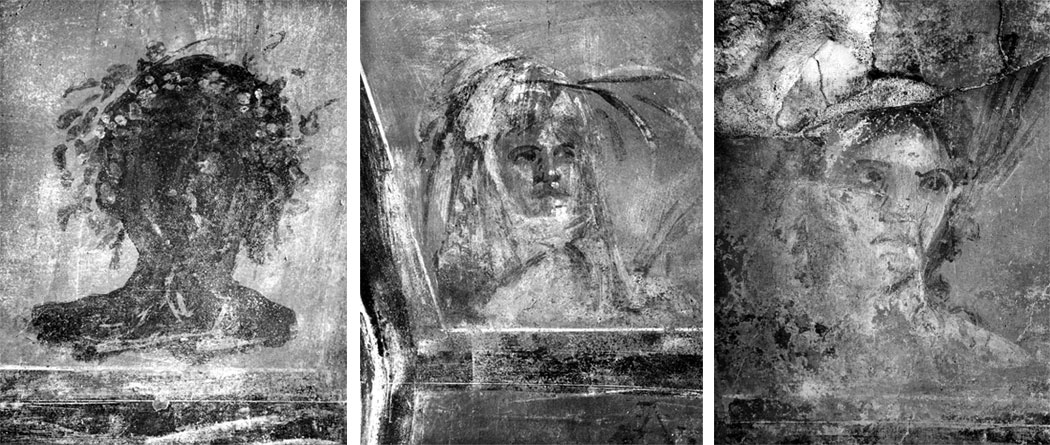
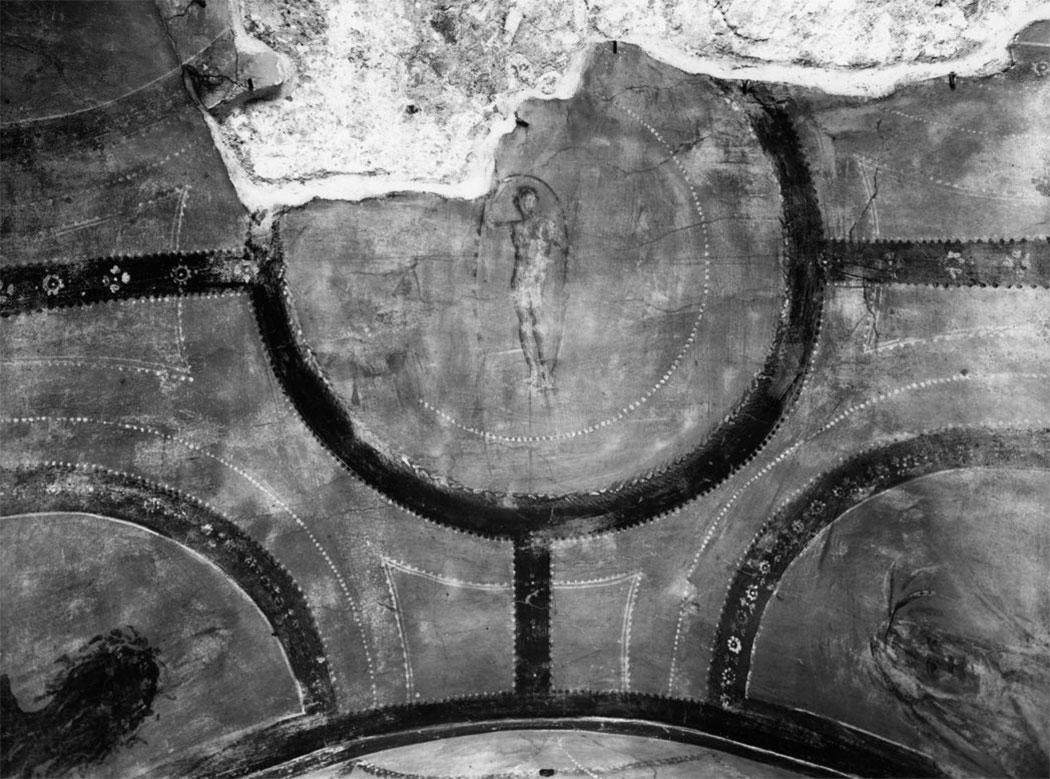
The tomb owner was probably depicted in the central niche of the back wall. On the walls beside the niche two winged figures offered the female owner a crown of victory. On one of the side walls was the deceased in a banquet scene. On the other wall we could see bread, fruit and garlands. The vault too was painted: in the middle a nude youth, and in the corners the four seasons.
During the excavations three of the four saesons were still intact: spring with a garland in her hair and, on the opposite side, winter with a veiled head. Summer was depicted with grain ears.
Calza mentions that, in spite of the crude painting of the whole, the three heads of the seasons radiated a beautiful expression.
Tomb 57 dates back to the middle of the second century AD.
- Sources
- Russel Meigs - Roman Ostia, At the Clarendon Press 1973
- Guido Calza - Necropoli nell'Isola Sacra'(1940)
- Dr. Jan Theo Bakker.
- Hilding Thylander - Inscriptions du port d'Ostie (Lund C W K Gleerup 1952).
- Ida Baldassarre, Irene Bragantini, Chiara Morselli and Franc Taglietti - Necropoli di Porto, Isola Sacra (Roma 1996).
Isola Sacra Index (F)
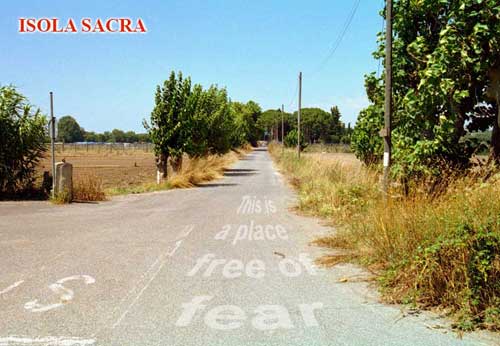
Section spéciale consacrée au cimetière romain de Portus (en anglais)....
Lire la suite...La flotte de Pise retrouvée
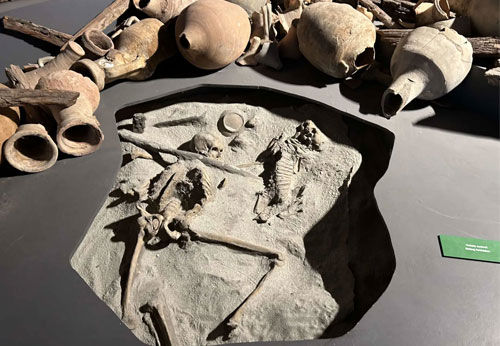
En 1998, un incroyable patrimoine archéologique a été découvert par hasard près de la gare de Pisa San Rossore....
Lire la suite...Leptiminus
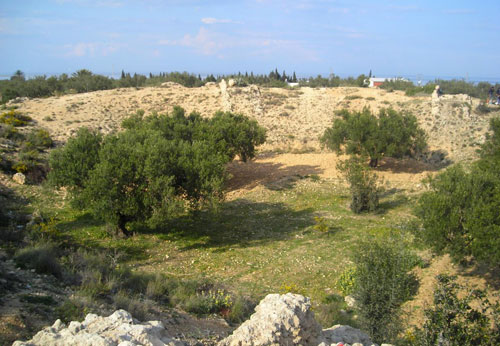
À l’emplacement de l’actuelle Lamta, sur la côte est de la Tunisie, existait déjà dans l’Antiquité une ville portuaire appelée Leptis Minor....
Lire la suite...Droit romain du commerce maritime
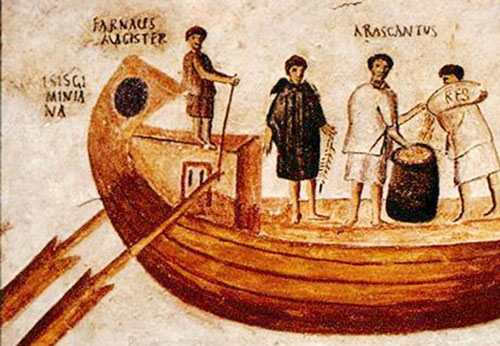
La loi romaine est le plus beau monument que Rome ait laissé en Europe occidentale...
Lire la suite...Sullecthum (Salakta)
Au Sahel, dans la province tunisienne de Madhia, on trouve la petite ville de Salakta en bord de mer....
Lire la suite... We are committed to providing versions of our articles and interviews in several languages, but our first language is English.