Tomb 92
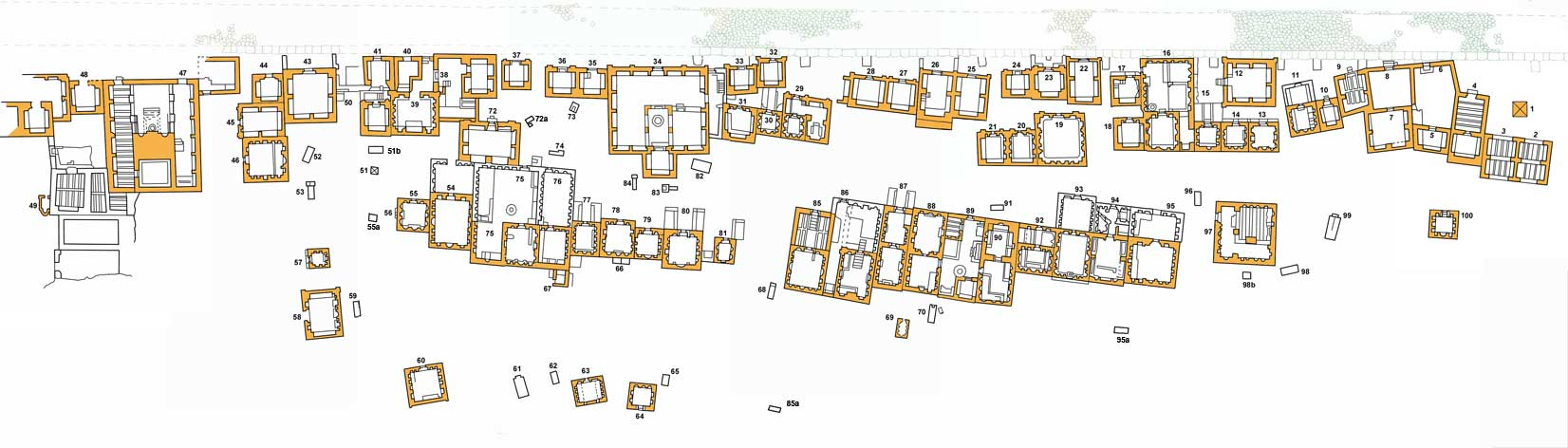
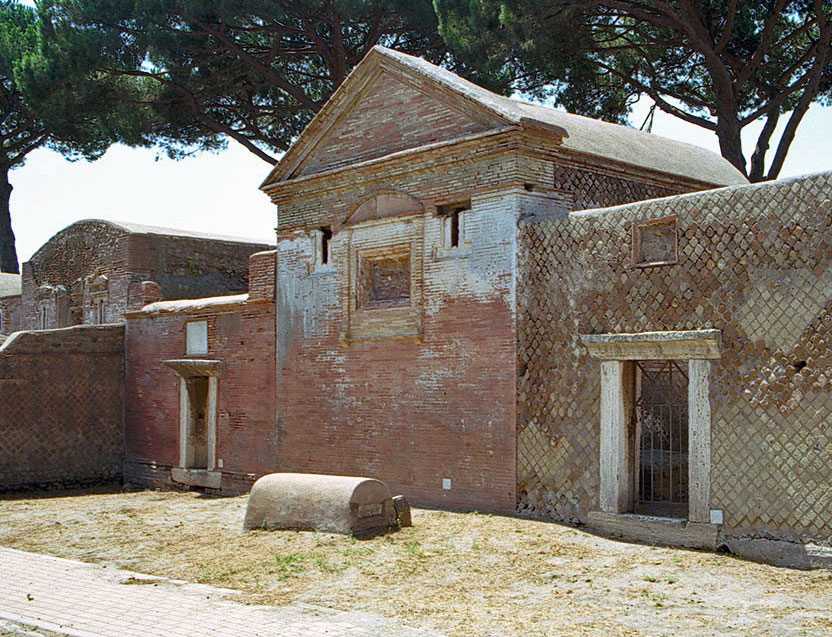
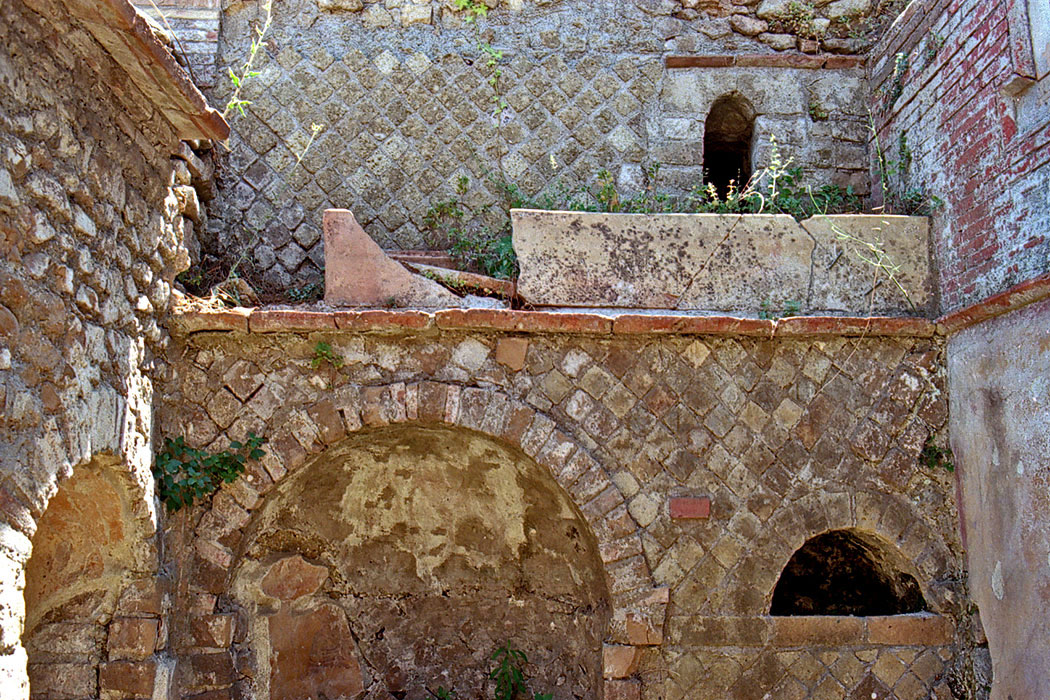
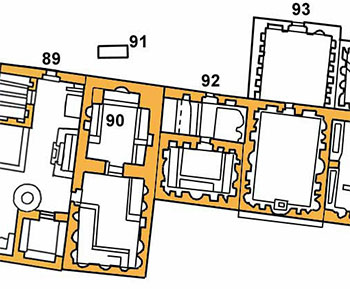 The enclosure of tomb 92 has been built later than the burial chamber. Contrary to most cases in this necropolis, the masonry of the enclosure differs from the burial chamber: the façade consists mainly of opus reticulatum, small blocks of tuff.
Tomb 92 shares the side walls with tombs 90 and 93.
The inscription has not survived. We see, however, a part of the beautifully decorated cornice. Next to that cornice are two small windows for illumination of the burial chamber.
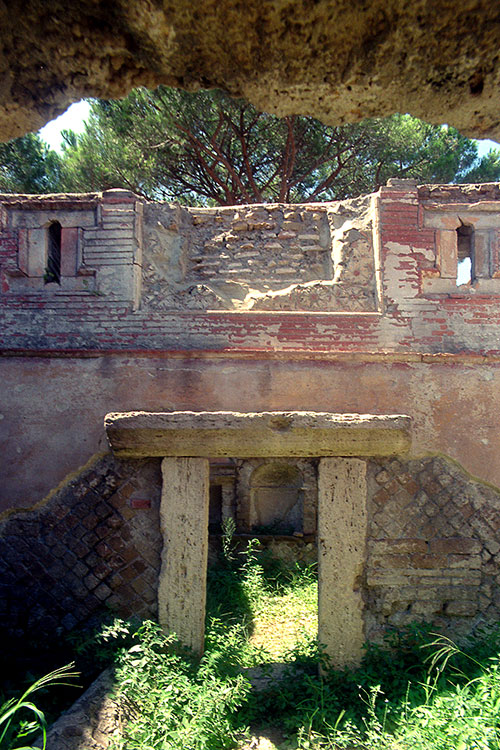
the enclosure.
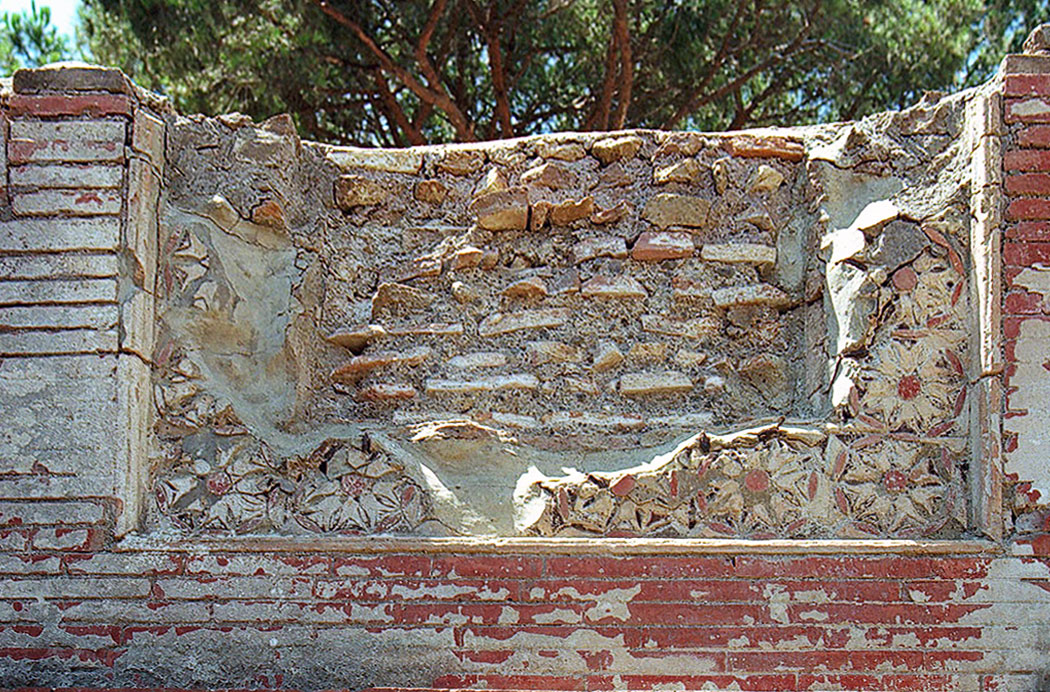
The burial chamber was organized for placing urns only. Alongside the walls we see a lot of small, semicircular niches besides larger, rectangular niches with tympanum. The decorations, made of stucco and paintings, are lost.
The floor, partly still visible, consisted of black-and-white mosaic.
During a later reuse of the burial chamber, formae for inhumation were dug under the floor. At the same time platforms for supporting sarcophagi were added and a new mosaic floor with geometrical patterns was made (now in the Ostian museum).
The original burial chamber was built during the reign of Hadrian.
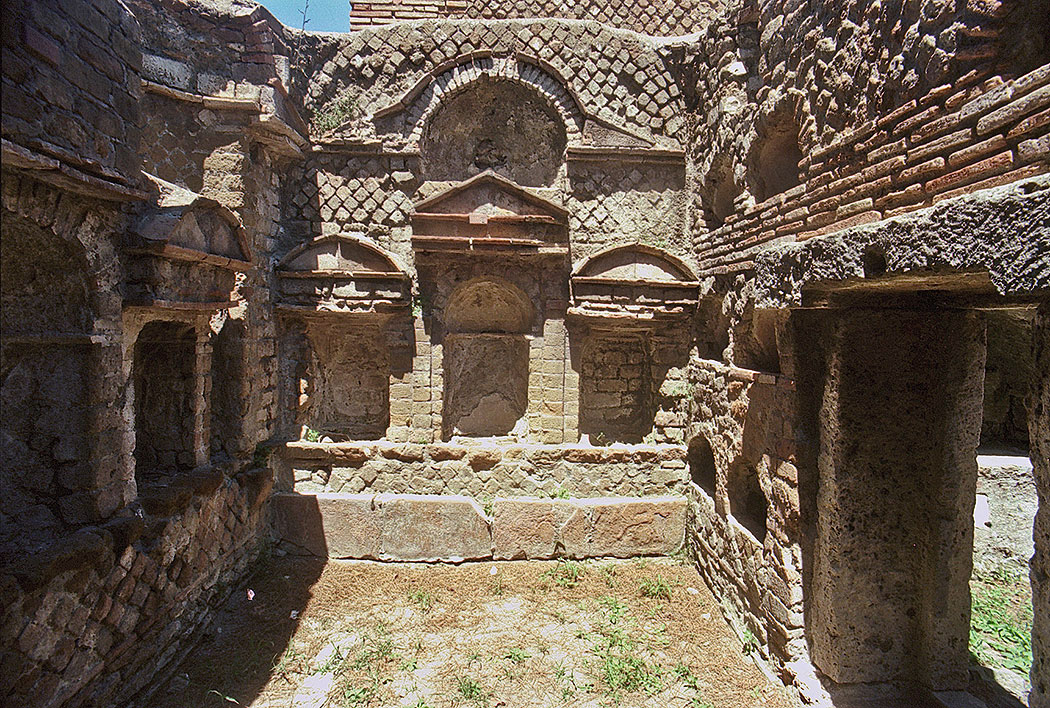
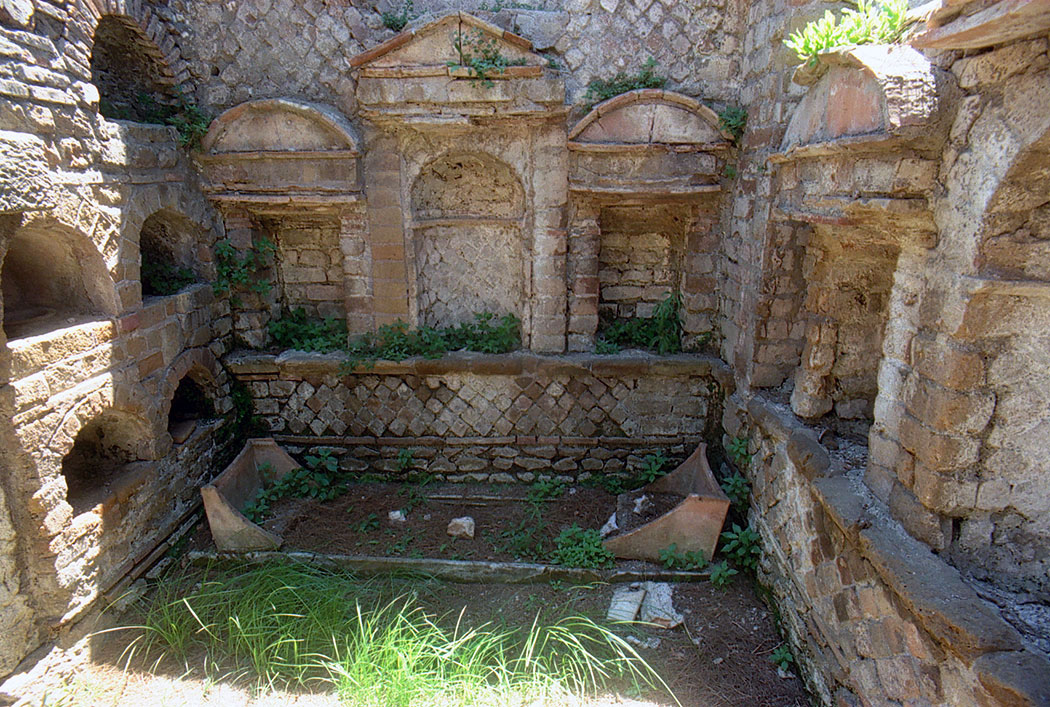
The front of the enclosure lies on the same line as the burial chamber of tomb 93.
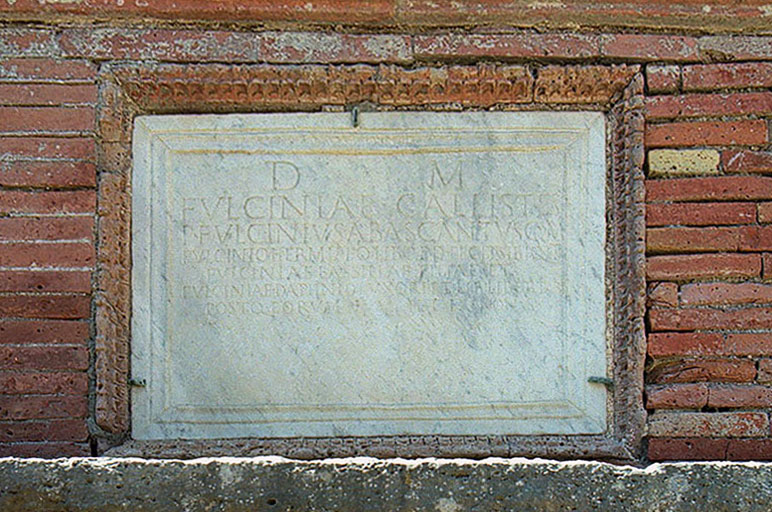
Above the entrance, surrounded by a decorated cornice, is an inscription on a marble slab of 38 x 53 cms:
D(is) M(anibus)
FVLCINIAE CALLISTES
P(ublius) FVLCINIVS ABASCANTVS CVM
FVLCINIO HERMIPPO LIB(erto) P(ro) P(arte) D(imidia) FECIT SIBIQ(ue) ET
FVLCINIAE BASSILLAE FILIAE ET
FVLCINIAE DAPHNIDI VXORI ET LIB(ertis) LIBERTAB(usque)
POST(eris)Q(ue) EORVM H(oc) M(onumentum) H(eredem) F(amiliae) EX(terum) NON
S(equetur)
To the divine Manes of Fulcinia Calliste. Publius Fulcinius Abascantus with Fulcinius Hermippus, freedman, for half of the expenses, built this monument for himself and for Fulcinia Bassilla, his daughter, and Fulcinia Daphnis, his wife, for his freed slaves, and the descendants. The monument could not be inherited by persons not belonging to the family.
The clause that speaks about no access for members outside the family is in contrast with another text found below an arcosolium built in the right wall of the enclosure during a second time of use. Here names are mentioned of unrelated people:
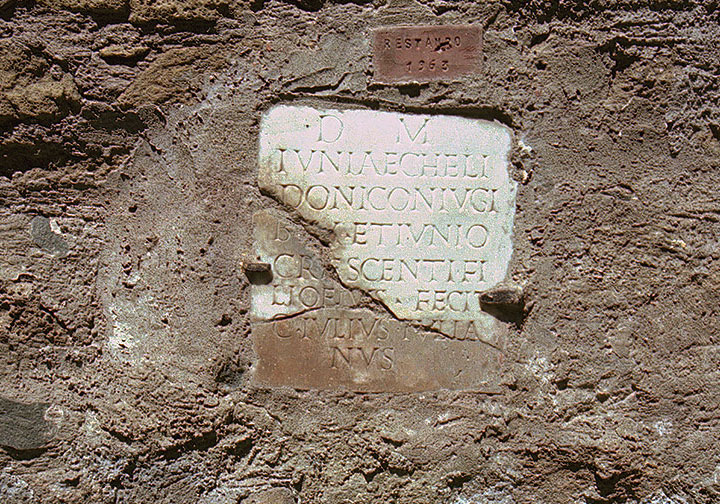 D(is) M(anibus)
IVNIAE CHELI
DONI CONIVGI
B(ene) M(erenti) ET IVNIO
CRESCENTI FI
LIO EIVS FECIT
C(aius) IVLIVS IVLIA
NVS
Caius Iulius Iulianus made it for Iunia Chelido, his well-deserving wife, and for Iunius Crescens, his son.
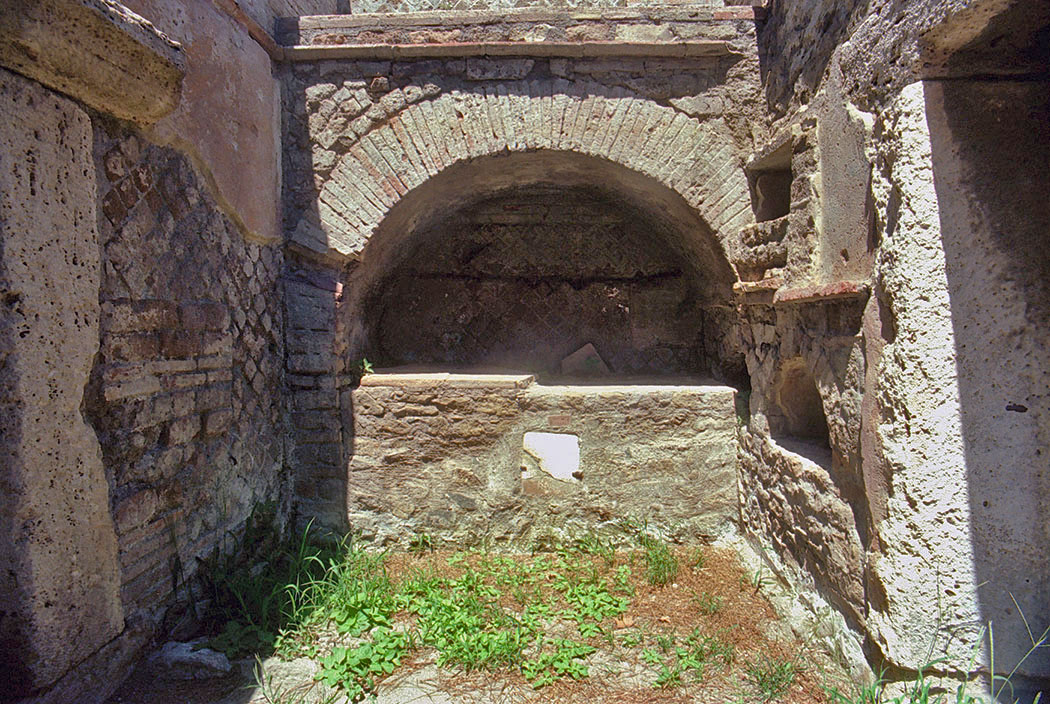
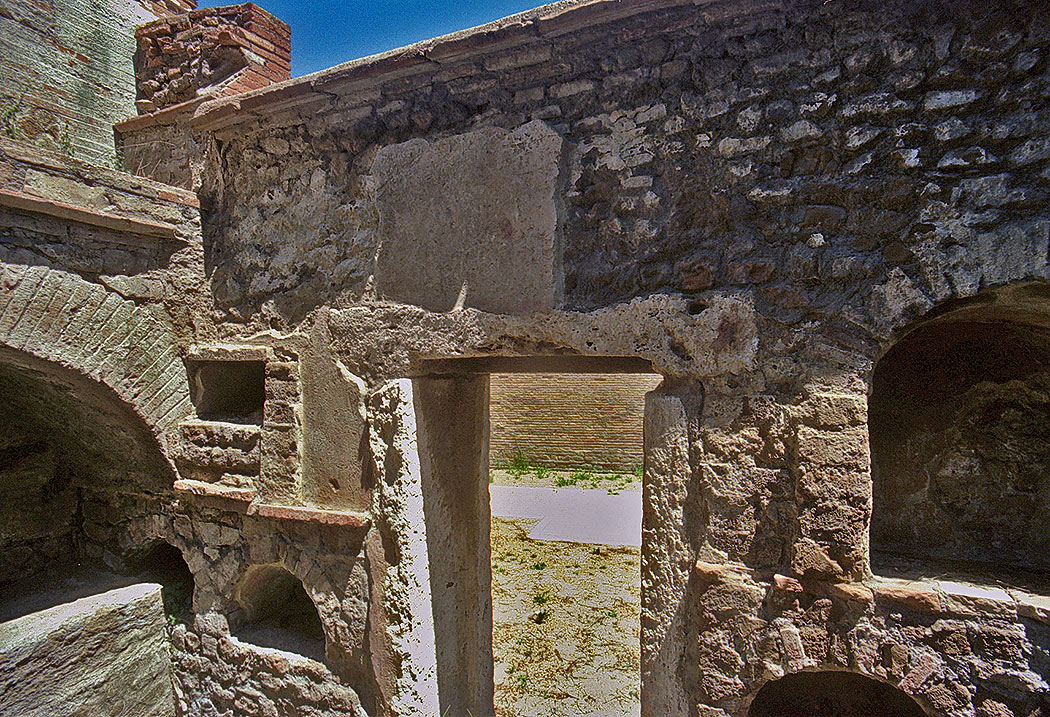
the burial chamber.
- Sources
- Russel Meigs - Roman Ostia, At the Clarendon Press 1973
- Guido Calza - Necropoli nell'Isola Sacra'(1940)
- Dr. Jan Theo Bakker.
- Hilding Thylander - Inscriptions du port d'Ostie (Lund C W K Gleerup 1952).
- Ida Baldassarre, Irene Bragantini, Chiara Morselli and Franc Taglietti - Necropoli di Porto, Isola Sacra (Roma 1996).
Ostia, Roms Versorger oder Handelsplatz
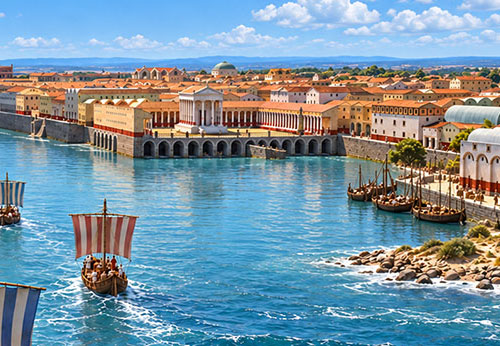
Die veränderte wirtschaftliche Rolle Ostias nach dem Bau von Portus im Licht neuer archäologischer Erkenntnisse.
Weiterlesen ...Carthago Nova, der perfekte Hafen der (neuen) Neustadt
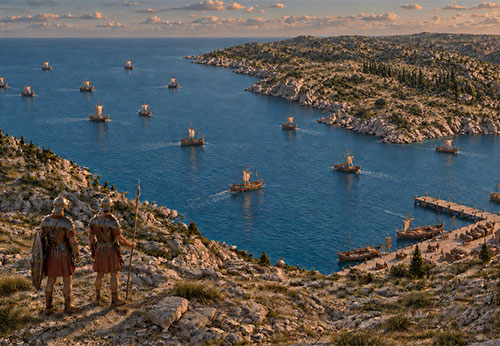
Nach dem Tod Hasdrubals wurde sein Neffe Hannibal Oberbefehlshaber der karthagischen Streitkräfte in Hispanien....
Weiterlesen ...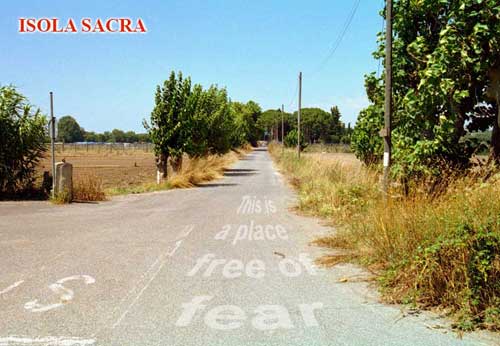
Die wiederentdeckte Flotte von Pisa
1998 wurde in der Nähe des Bahnhofs Pisa San Rossore zufällig ein unglaubliches archäologisches Erbe entdeckt....
Weiterlesen ...Leptiminus
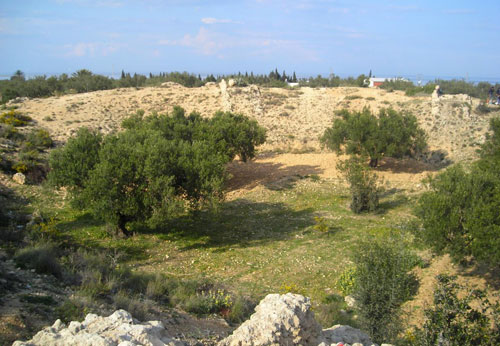
Am Standort des heutigen Lamta an der Ostküste Tunesiens gab es bereits in der Antike eine Hafenstadt namens Leptis Minor....
Weiterlesen ... We are committed to providing versions of our articles and interviews in several languages, but our first language is English.