Tomb 79
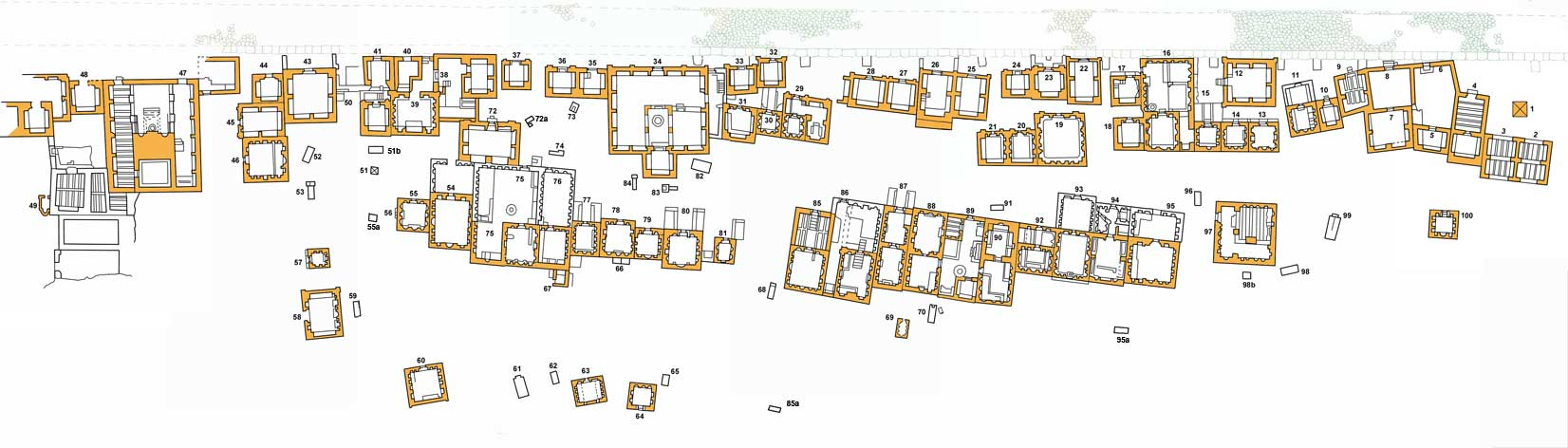
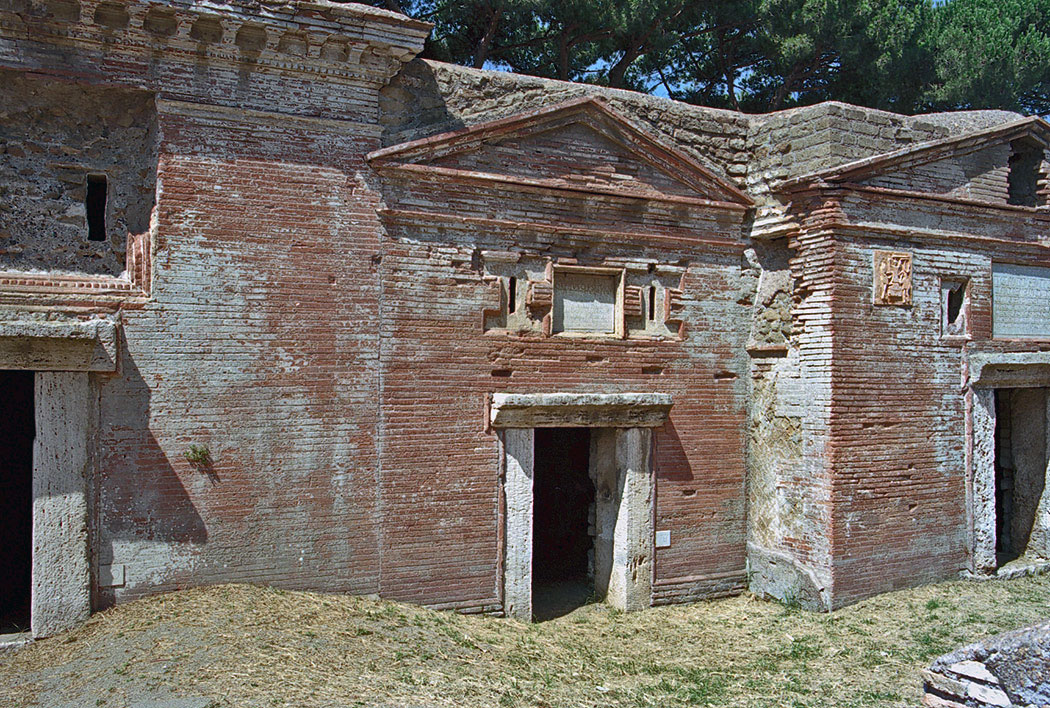
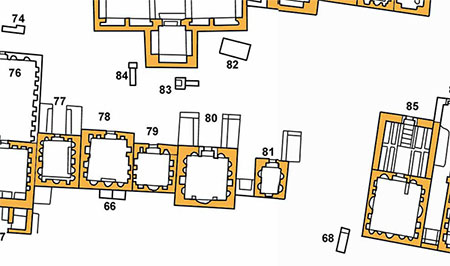
Above the entrance of tomb 79 we find the following inscription on a marble slab of 37 x 52 cms:
| D(is) M(anibus) Q(uintus) APPIVS Q(uinti) F(ilius) SATVRNI NVS FECIT SIBI ET ANNI AE DONATAE COIVGI SVAE BENE MERENTI ET LIBERIS LIBERTIS LIBERTABVSQVE POSTERISQVE EORVM HOC MONIMENTVM HEREDEM NON SEQVETVR NEQVE HIS QVIBVS RELIQVI VENDERE DONANDI IN EO IVS HABERE LICEAT IN FRONT(e) P(edes) X IN AGRO P(edes) XII |
|
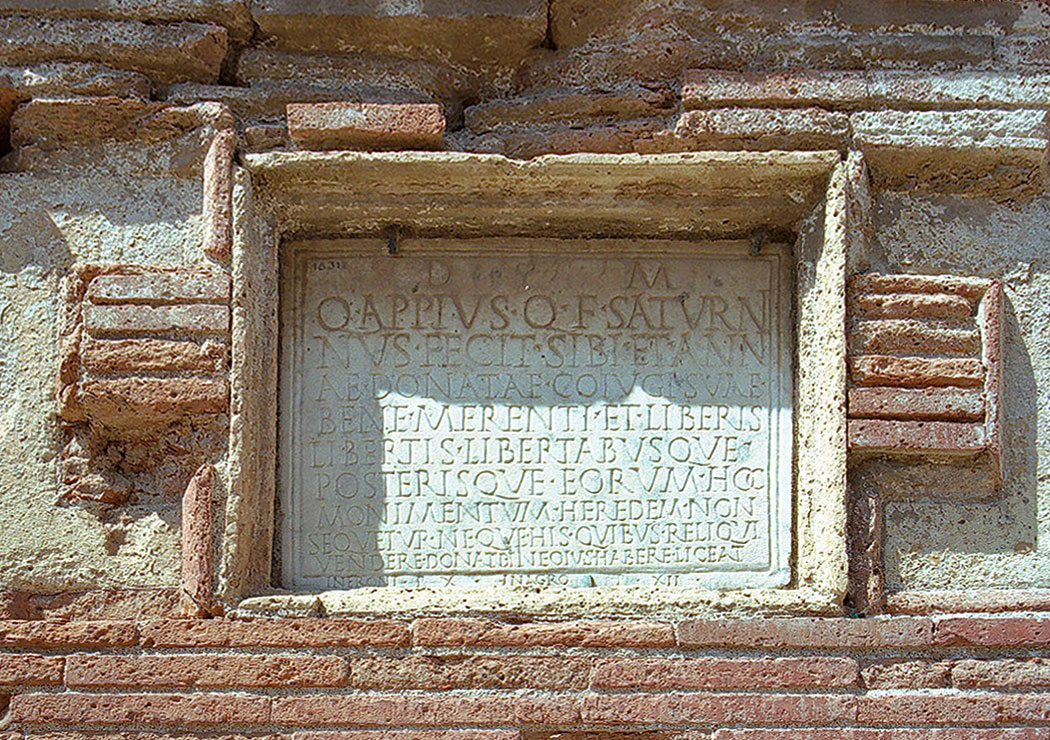
The entrance and the enclosure were made by Tiberius Claudius Eutychus for Claudia Memnonis, his well-deserving wife, for himself and their children, for their freed slaves, and the descendants.
The monument could not be inherited.
The area in width and in depth measured 15 Roman feet.
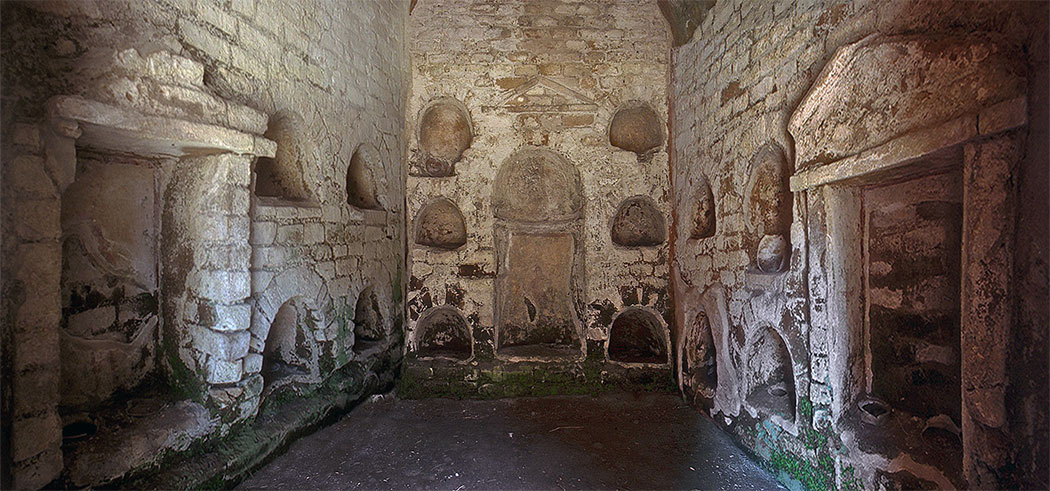
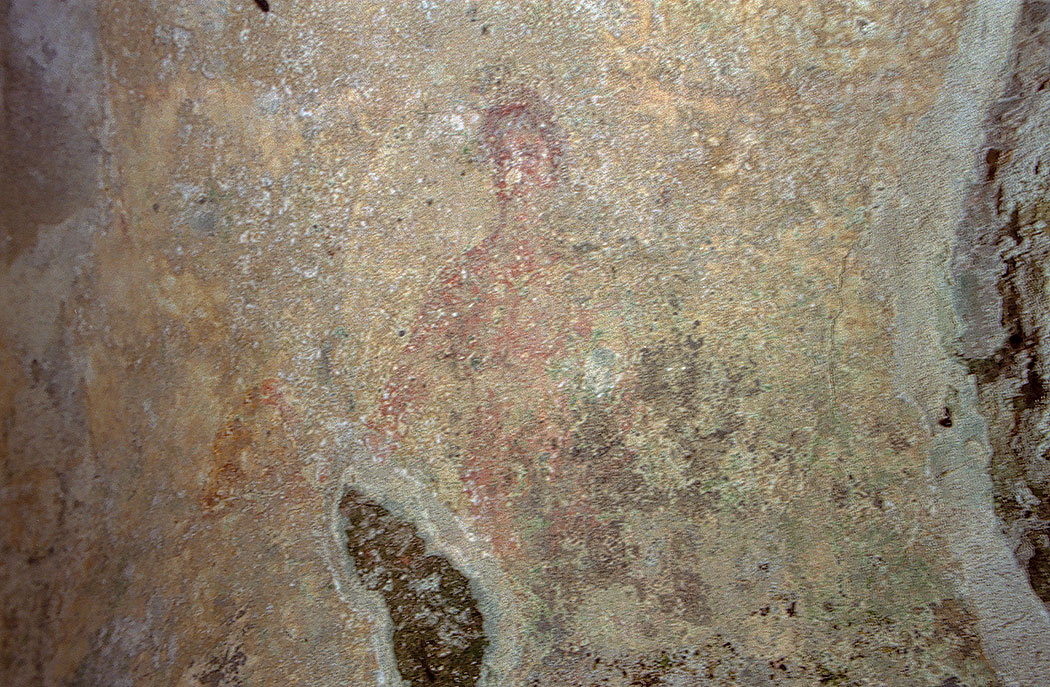
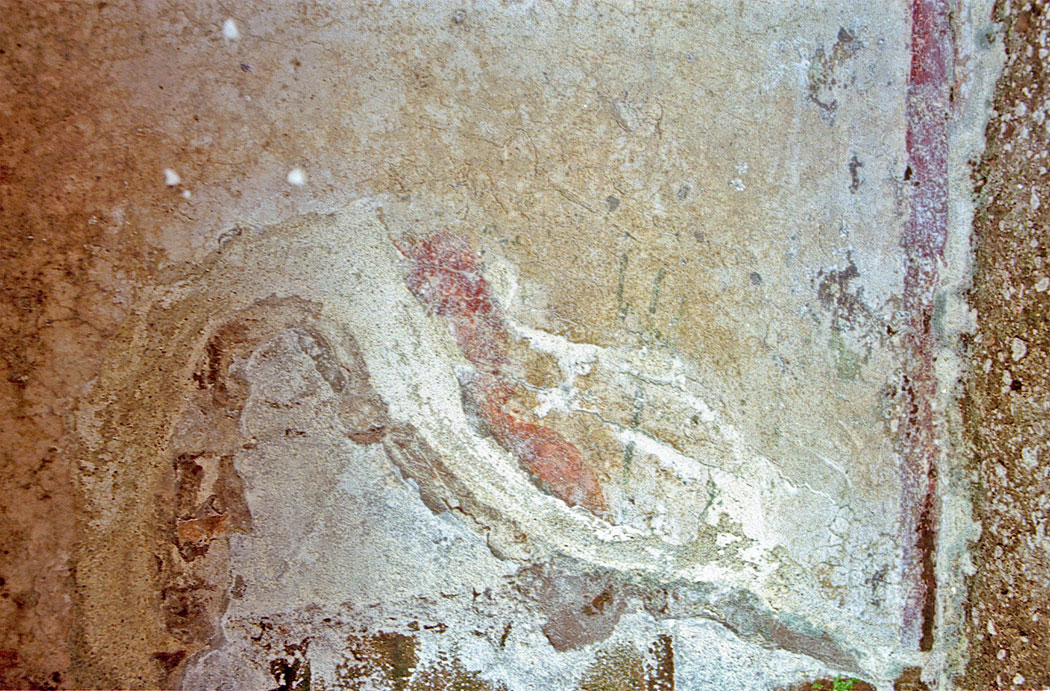
Above the central rectangular niche in each wall is a triangular tympanum. The niche in the left wall has a painting of Neptune on a white-yellow background. You can clearly see the trident in his left hand.
In the niche in the right wall, Hercules was depicted with a club in his right hand (now in the stroage rooms of Ostia).
The ceiling, white plastered, had many painted circles. Some of these still preserved paintings of male and female heads (probably the four seasons). Others were showing painted flowers. The best preserved pictures are stored in the Ostian storage rooms.
Brick stamps are dating tomb 79 back to 123 AD.
- Sources
- Russel Meigs - Roman Ostia, At the Clarendon Press 1973
- Guido Calza - Necropoli nell'Isola Sacra'(1940)
- Dr. Jan Theo Bakker.
- Hilding Thylander - Inscriptions du port d'Ostie (Lund C W K Gleerup 1952).
- Ida Baldassarre, Irene Bragantini, Chiara Morselli and Franc Taglietti - Necropoli di Porto, Isola Sacra (Roma 1996).
- Notes
- 1: Guido Calza pointed that tomb 79 seemed to be much lower than usually in antiquity. By his opinion the floor was raised due to the water overflow. This should also explain why the lower niches of the walls are so close to the floor. Guido Calza: Necropoli nell’ Isola Sacra. 1940
Ostia, Roms Versorger oder Handelsplatz
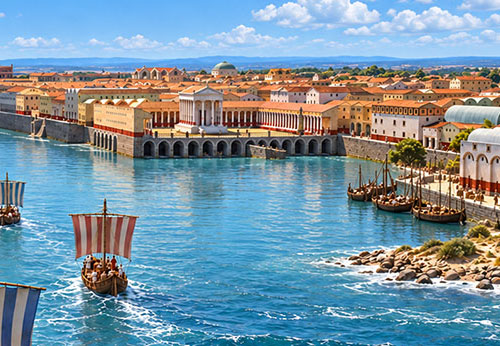
Die veränderte wirtschaftliche Rolle Ostias nach dem Bau von Portus im Licht neuer archäologischer Erkenntnisse.
Weiterlesen ...Carthago Nova, der perfekte Hafen der (neuen) Neustadt
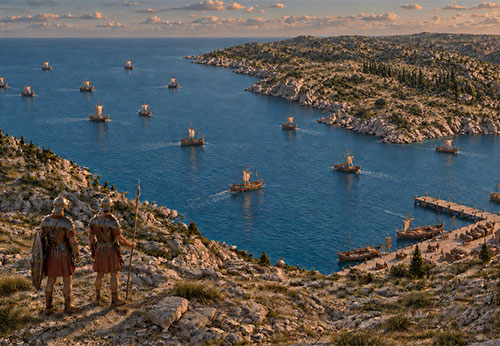
Nach dem Tod Hasdrubals wurde sein Neffe Hannibal Oberbefehlshaber der karthagischen Streitkräfte in Hispanien....
Weiterlesen ...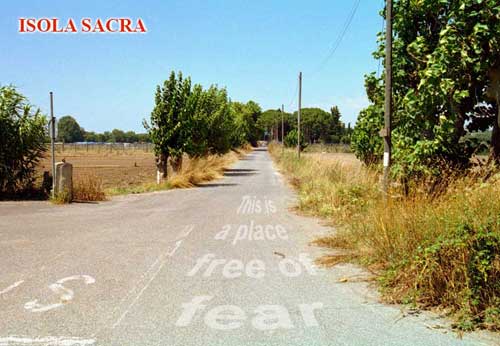
Die wiederentdeckte Flotte von Pisa
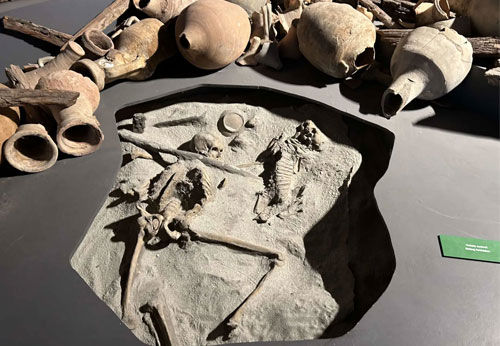
1998 wurde in der Nähe des Bahnhofs Pisa San Rossore zufällig ein unglaubliches archäologisches Erbe entdeckt....
Weiterlesen ...Leptiminus
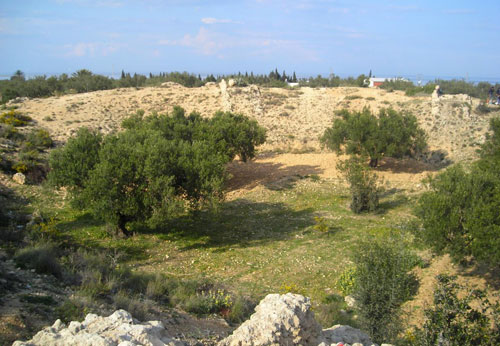
Am Standort des heutigen Lamta an der Ostküste Tunesiens gab es bereits in der Antike eine Hafenstadt namens Leptis Minor....
Weiterlesen ... We are committed to providing versions of our articles and interviews in several languages, but our first language is English.