Canal tomb I
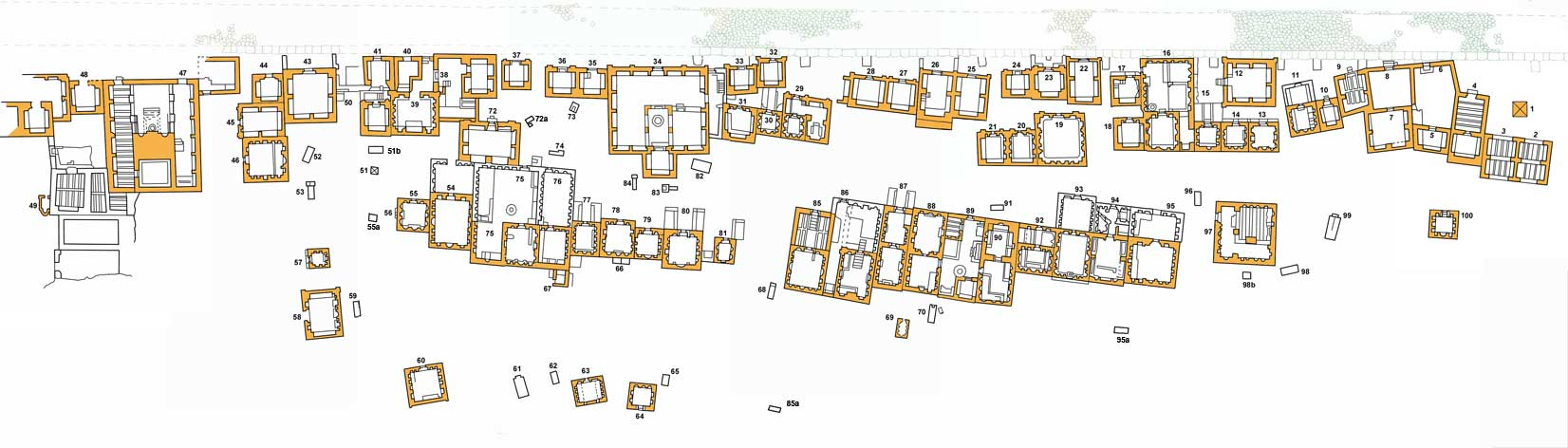
Tomb I leans for a large part against tomb H and has its façade towards the main street. The façade has been built up with inaccurate large brickwork and stretches of opus reticulatum.
The door has, like al the other tombs, jambs and an architrave of travertine. Next to the door is a square hole in the wall. The hole is divided by a small brick column, which changes it into two small windows.
On the left side, above the door, we find a brick relief of a hammer. To the left of the relief, framed in a triple cornice, was the following marble inscription, measuring 57 x 50 cms:
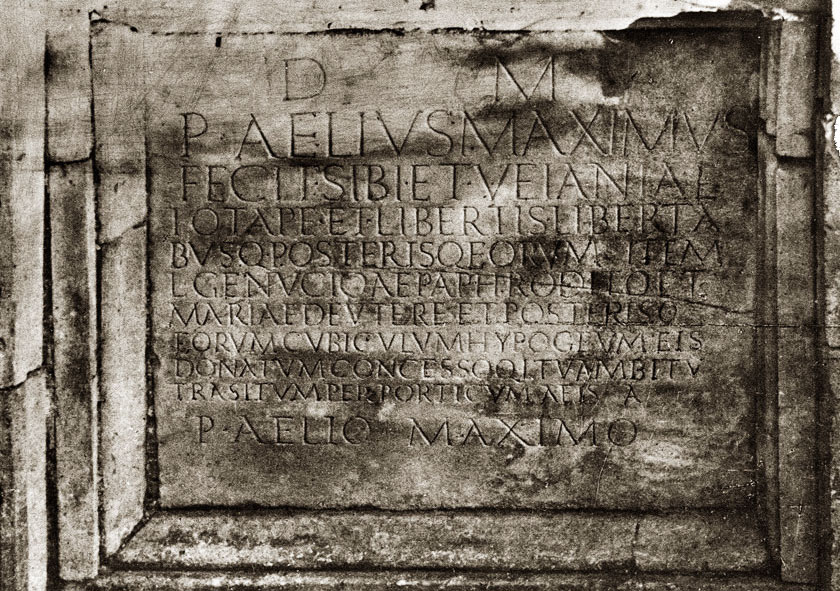 D(is) M(anibus)
P(ublius) AELIVS MAXIMVS
FECIT SIBI ET VEIANIA
IOTAPE ET LIBERTIS LIBERTA
BVSQ(ue) POSTERISQ(ue) EORVM ITEM
L(ucio) GENVCIO AEPAPHRODITO ET
MARIAE DEVTERE ET POSTERISQ(ue)
EORVM CVBICVLVM HYPOGEVM EIS
DONATVM CONCESSOQ(ue) ITV AMBITV
TRASITVM PER PORTICVM AEIS A
P(ublio) AELIO MAXIMO
The inscription tells us that Publius Aelius Maximus has built this monument for himself and for Veiania Iotape, his freedmen and freedwomen, and the descendants; also for Lucius Genucius Epaphroditus and Maria Deutera and their descendant,s after a subterranean burial chamber has been given to them and the right to come and go and to walk under the portico has been permitted by Publius Aelius Maximus.
The door of tomb I gives access to tombs I, L, M, N, and O.
- Sources
- Russel Meigs - Roman Ostia, At the Clarendon Press 1973
- Guido Calza - Necropoli nell'Isola Sacra'(1940)
- Dr. Jan Theo Bakker.
Ostia, supplier of Rome or marketplace of the Mediterranean?
The changing economic role of Ostia after the construction of Portus in the light of new archaeological evidence.
Read more ...Carthago Nova, the perfect harbour of the (new) new town
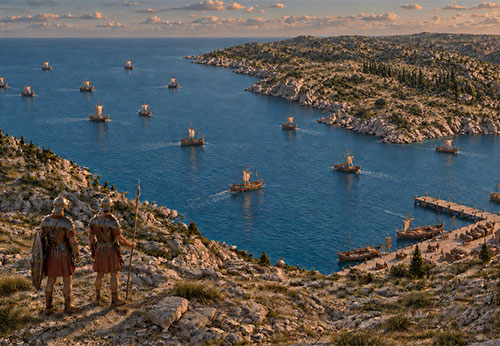
After Hasdrubal's death, his nephew Hannibal became commander-in-chief of the Carthaginian forces in Hispania....
Read more ...Isola Sacra Index
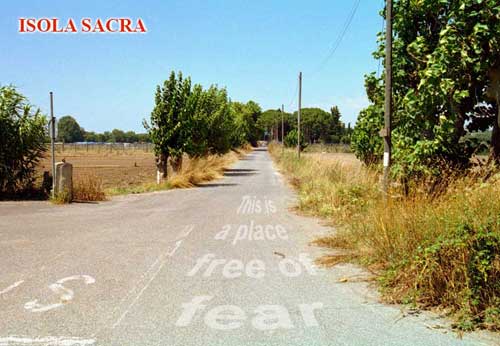
Speciale sectie over de Romeinse begraafplaats van Portus (Engels)....
Read more ...The resurfaced fleet of Pisa
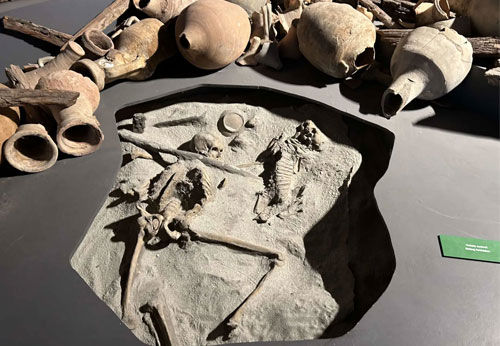
In 1998, an incredible archaeological heritage was discovered by accident near the Pisa San Rossore railway station....
Read more ...Leptiminus
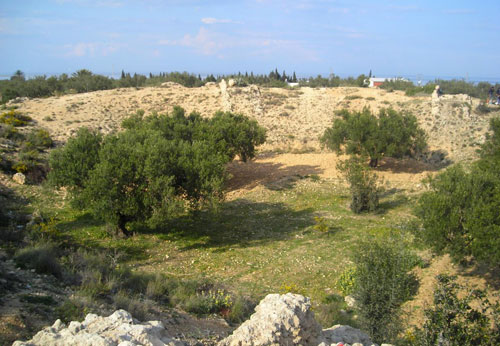
At the site of present-day Lamta on Tunisia's east coast, there was already a port city named Leptis Minor ....
Read more ... We are committed to providing versions of our articles and interviews in several languages, but our first language is English.